
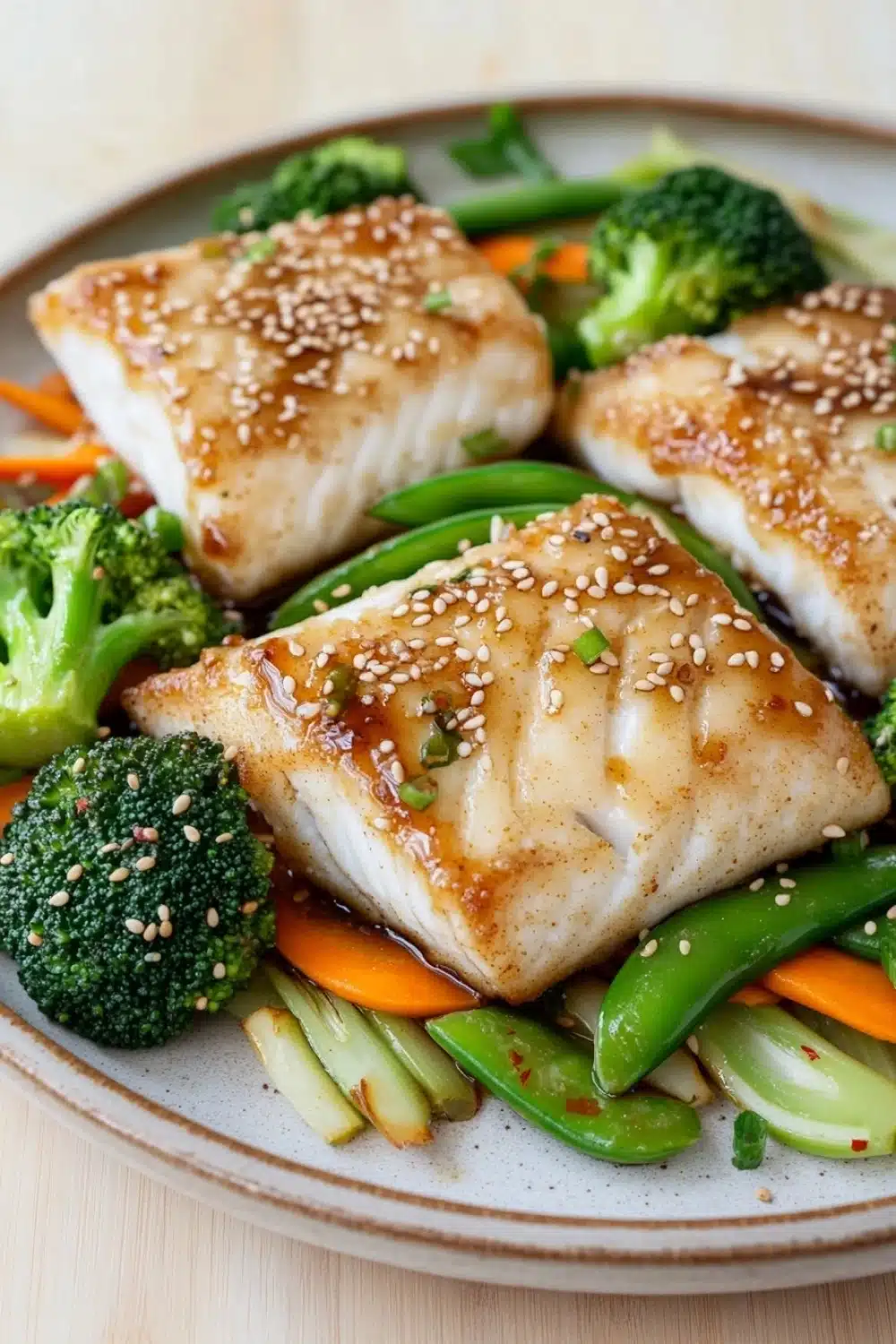
Fresh catch, meet bold flavors.
There’s something about cooking white fish with an Asian twist that instantly amps up a weeknight dinner. The kitchen fills with the fragrant aroma of ginger and garlic sizzling in sesame oil — that sizzle, that hiss, it’s the soundtrack of a meal coming to life. I remember the first time I tried this combo; the flavors hit like a punch, yet the dish stayed light and clean. No heavy-handed sauces here, just a slick of soy and a hint of honey to balance the zing.
Steaming veggies and pan-searing fish might sound run-of-the-mill, but it’s all about timing and rhythm. Tossing snap peas, broccoli, and carrots into the skillet—crisp and colorful—makes the plate pop and keeps each bite exciting. The sauce? Silky and glossy, coating everything just right without turning into a gloopy mess.
This dish nails being quick, tasty, and healthy all at once. Trust me, it’s a keeper when you want to get dinner on the table fast but still impress yourself (or your crew). So, grab your wok or skillet, and let’s get to it.
For more delicious ideas, check out our Dinner recipe collection to find tasty white fish Asian dishes and beyond.
Real Life Benefits of Asian-Style White Fish with Ginger and Soy
- Whips up in under 30 minutes—perfect for those hectic weeknights when you’re racing the clock.
- Lean protein meets fresh veggies, giving your body a clean fuel boost without feeling weighed down.
- Low-sodium soy sauce keeps the salt game in check, so your heart thanks you later.
- Ginger and garlic bring natural zing and anti-inflammatory perks—your immune system’s little helpers.
- Leftovers reheat like a charm, making it a solid go-to for lunch or a quick dinner encore.
Asian-Style White Fish with Ginger and Soy
- Total Time: 27 minutes
- Yield: 4 1x
Description
A light and flavorful Asian-inspired white fish dish featuring a savory ginger-soy sauce, steamed vegetables, and fresh scallions. Perfect for a healthy and quick dinner.
Ingredients
4 white fish fillets (such as cod or tilapia), about 6 ounces each
2 tablespoons soy sauce (low sodium)
1 tablespoon sesame oil
1 tablespoon fresh ginger, finely grated
2 garlic cloves, minced
1 tablespoon honey
1 tablespoon rice vinegar
1 teaspoon cornstarch
2 tablespoons water
1 cup broccoli florets
1 cup thinly sliced carrots
1 cup snap peas
2 scallions, thinly sliced
1 tablespoon toasted sesame seeds
1 tablespoon vegetable oil
Salt, to taste
Freshly ground black pepper, to taste
Instructions
In a small bowl, whisk together soy sauce, sesame oil, grated ginger, minced garlic, honey, and rice vinegar to create the sauce mixture.
In another small bowl, mix cornstarch and water until smooth and set aside.
Pat the white fish fillets dry with paper towels and season both sides lightly with salt and freshly ground black pepper.
Heat vegetable oil in a large non-stick skillet over medium-high heat.
Add the fish fillets to the skillet and cook for about 3-4 minutes on each side until the fish is opaque and flakes easily with a fork. Remove the fish from the skillet and set aside on a warm plate.
In the same skillet, add broccoli, carrots, and snap peas. Stir-fry the vegetables for 3-4 minutes until tender-crisp.
Pour the prepared sauce mixture over the vegetables and bring to a gentle simmer.
Stir in the cornstarch slurry and cook for 1-2 minutes until the sauce thickens.
Return the cooked fish fillets to the skillet and spoon the sauce and vegetables over the fish to coat evenly. Cook for an additional 1-2 minutes to heat through.
Transfer the fish and vegetables to serving plates. Garnish with sliced scallions and toasted sesame seeds before serving.
- Prep Time: 15 minutes
- Cook Time: 12 minutes
Explore more:
Dinner Recipes
Asian-Style White Fish with Ginger and Soy: Pro Tips & Fixes
The Sauce Swap That Saves the Day
If you ever find yourself staring blankly at the pantry, missing a key sauce ingredient—don’t panic. Soy sauce? No sweat. Tamari or coconut aminos step in like seasoned pros, maintaining that salty umami punch without throwing the flavor off-balance. Honey? Maple syrup or agave nectar work just fine, tweaking the sweetness without turning the whole dish into a dessert. The rice vinegar? Apple cider vinegar is a cheeky substitute, lending a different but pleasant tang. I once subbed in whatever was handy during a late-night cook and the dish sailed through just fine. Bottom line: keep your sauce game flexible—Asian cooking is all about balance, not rigidity.
Why That Fish Has to Be Dry—Seriously
Patting your fish fillets dry isn’t a trivial chore—it’s the real MVP behind that perfect sear. Here’s the scoop: moisture is the enemy of a crisp crust. If the surface is wet, you’re basically steaming the fish in its own juices instead of getting that satisfying Maillard reaction. I’ve had fish flake apart like a sad science experiment because I skipped this step. A quick dab with paper towels, and your fish goes from soggy to showstopper. Oh, and season right after drying—salt draws out moisture, so if you wait too long after salting, you might get soggier fish. Trust me, these small timing hacks save you from a slippery, sad fail.
Rescuing the Sauce When It Goes Too Thin—or Too Thick
Picture this: you add your cornstarch slurry, expecting a velvety sauce, but instead, you get a gloopy mess or a watery puddle. Here’s the fix-it playbook. Too thin? Whisk in another teaspoon of cornstarch slurry (mix cornstarch + cold water) gradually—don’t dump it all at once. Stir constantly while simmering, and the sauce will tighten up like a charm. Too thick or gloopy? Add a splash of water or broth—slowly—while stirring to loosen it up. Another pro tip: cool sauces thicken more, so adjust the consistency while it’s hot. I once nearly tossed a batch because it was gloppy, but a quick water rescue brought it back. Don’t sweat the small stuff—master the slurry dance and your sauce will always hit the mark.
FAQs About Asian-Style White Fish with Ginger and Soy
A1: Yes, but thaw them completely and pat dry before cooking. Frozen fish tends to release more water, which can mess with that perfect sear and sauce consistency.
A2: The cornstarch slurry is your secret weapon. Mixing cornstarch with water and adding it slowly while simmering creates that glossy, clingy sauce that hugs every bite of fish and veggie. Skip it, and you’re left with a watery mess—no one wants that.
A3: Totally! Asian stir-fry is flexible—think snap peas, baby bok choy, or even thinly sliced bell peppers. Just keep the cook time similar to maintain that tender-crisp vibe.
A4: Nope, it leans savory and bright with ginger and soy, no heat kick. Feel free to toss in some chili flakes or a splash of sriracha if you want to crank up the heat.
A5: No. The fish cooks quickly and gets its flavor from the sauce added after cooking. Marinating could actually make the texture mushy, and that’s a big no-no in my book.