
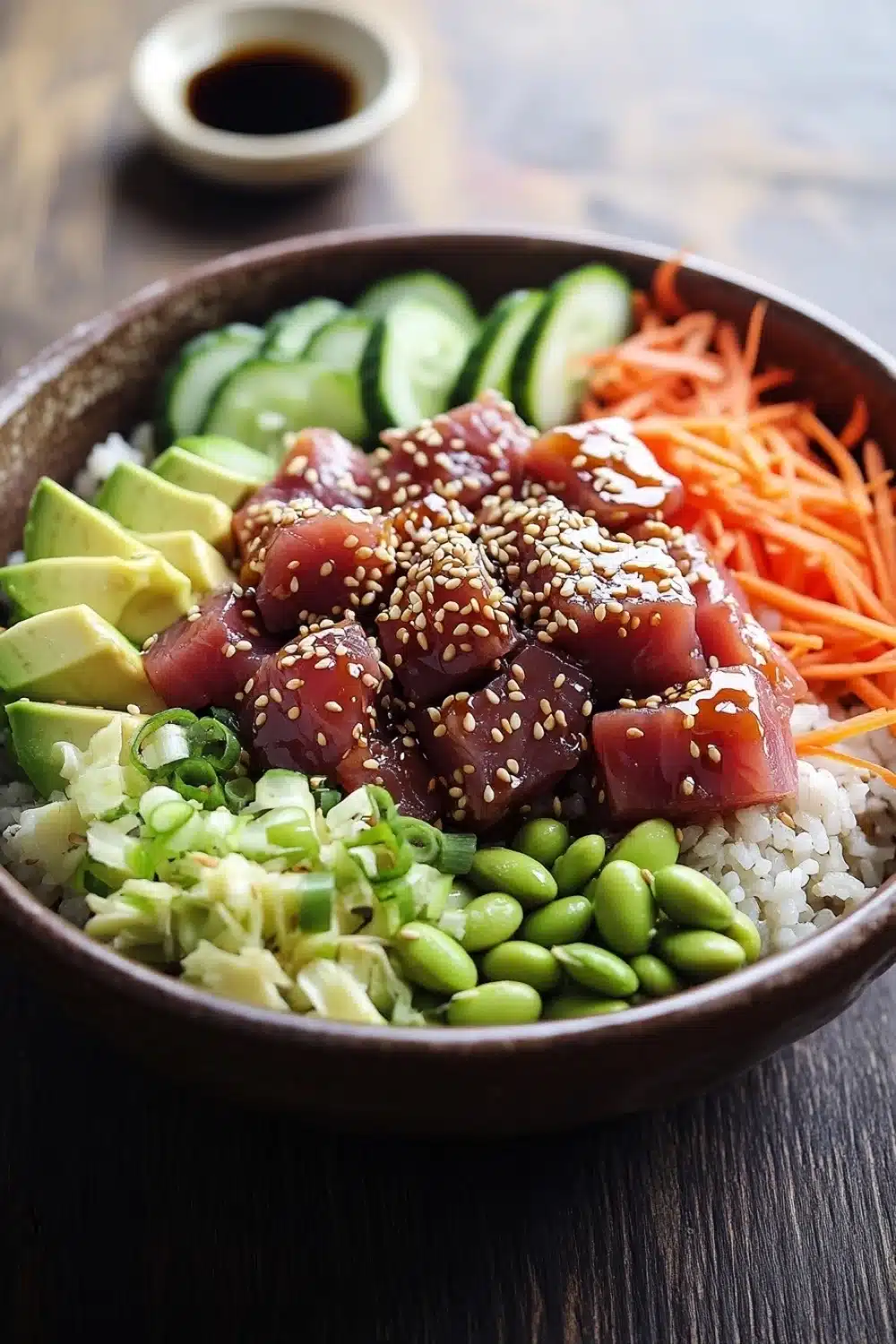
Not your typical poke.
There’s something thrilling about turning a raw classic on its head — the sizzle of tuna cubes hitting a hot skillet, that brief caramelization locking in flavor while the inside stays tender. I remember the first time I swapped out raw for seared; the kitchen instantly hummed with a new kind of energy.
Rice steams softly on the stove, fragrant with a whisper of vinegar and a pinch of sugar. Fresh avocado, crisp cucumber, and bright green edamame sit ready to mingle with that smoky soy-ginger drizzle. It’s a bowl that invites you to play — not just another pretty face in poke’s parade.
This cooked tuna poke bowl is a shortcut to something deeply satisfying yet light enough to serve at lunch or a casual dinner. Trust me, once you taste that warm, tender fish against the zesty rice and crunchy veg, you’ll be hooked—no raw fish required.
If you’re a fan of classic dishes, you’ll love this Old Fashioned Tuna Noodle Casserole: A Timeless Comfort Classic as a warm, satisfying alternative to your usual tuna poke bowl cooked at home.
Why Cooked Tuna Poke Bowls Win Every Time
- Seared tuna offers that perfect ‘just-off-the-raw’ texture—think tender with a slight crust that hooks you instantly.
- Rice gets a tangy twist from the vinegar-sugar-salt mix, turning plain starch into a flavor-packed base. No bland bites here.
- Veggie medley brings crunch and freshness, cutting through the richness with each mouthful—hello, cucumber and crunchy edamame!
- The soy-ginger-honey combo? It’s the sauce boss—sweet, salty, and zingy, pulling all components into a neat flavor hug.
- Leftovers? Store smartly—keeping dressing separate means you’ll dodge soggy rice and sad veggies the next day.
Cooked Tuna Poke Bowl
- Total Time: 25 minutes
- Yield: 2 1x
Description
A delicious twist on the classic poke bowl using seared tuna instead of raw, served over a bed of seasoned rice with fresh vegetables and a flavorful soy-ginger dressing.
Ingredients
1 cup sushi rice
1 1/4 cups water
2 teaspoons rice vinegar
1 teaspoon sugar
1/2 teaspoon salt
10 ounces fresh tuna steak
1 tablespoon sesame oil
1/4 cup soy sauce
1 tablespoon grated fresh ginger
1 tablespoon honey
1 teaspoon toasted sesame seeds
1/2 cup diced cucumber
1/2 cup diced avocado
1/4 cup shredded carrots
2 green onions, thinly sliced
1/4 cup edamame beans, shelled and cooked
1 teaspoon toasted sesame seeds (for garnish)
1 sheet nori, cut into thin strips (optional)
Instructions
Rinse the sushi rice under cold water until the water runs clear.
Combine the rinsed rice and 1 1/4 cups water in a medium saucepan and bring to a boil over high heat.
Once boiling, reduce heat to low, cover, and simmer for 15 minutes or until water is absorbed and rice is tender.
Remove from heat and let rice sit covered for 10 minutes.
In a small bowl, mix rice vinegar, sugar, and salt until sugar dissolves.
Transfer cooked rice to a large bowl and gently fold in the vinegar mixture. Set aside to cool slightly.
Cut the tuna steak into 1/2-inch cubes.
Heat sesame oil in a non-stick skillet over medium-high heat.
Add the tuna cubes and sear for 1-2 minutes per side until just cooked on the outside but still pink inside. Remove from heat.
In a separate bowl, whisk together soy sauce, grated ginger, and honey to create the dressing.
Place the seasoned rice into two serving bowls.
Arrange seared tuna, cucumber, avocado, shredded carrots, edamame, and green onions on top of the rice.
Drizzle the soy-ginger dressing evenly over each bowl.
Sprinkle toasted sesame seeds and nori strips (if using) over the top for garnish.
Serve immediately and enjoy your cooked tuna poke bowl.
- Prep Time: 15 minutes
- Cook Time: 10 minutes
Explore more:
Lunch Recipes
Mastering the Cooked Tuna Poke Bowl
The Not-So-Obvious Ingredient Switch: Why Cooked Tuna Works
Traditionally, poke bowls scream raw fish—slick, tender, and fresh. But flipping the script to seared tuna? That’s where the magic lies for those wary of sashimi-grade fears or simply craving more texture. Cooking the tuna just a hair (think 1-2 minutes per side) gives you a contrast—a warm, slightly caramelized exterior hugging a pink, silky core. It’s like a culinary mic drop. Plus, searing locks in those rich, oceanic juices instead of letting them drip away like tears in the rain. Pro tip: Use sesame oil for that nutty backbone during searing; it’s a game-changer that many miss. This switch means you get poke vibes without the raw fish jitters—comfort food meets cool street eats.
Breaking Down the Rice Ritual—Why This Step Can’t Be Skipped
Rinse the sushi rice like your kitchen depends on it. No, seriously—wash until the water runs clear. This is the ninja move that strips excess starch, preventing your rice from turning into a gummy, sad mush. After cooking, the rice vinegar-sugar-salt blend isn’t just a fancy drizzle—it’s the backbone of that signature poke bowl tang. Folding it gently, not stirring like a mad scientist, keeps each grain intact and glossy. Letting the rice rest under cover for 10 minutes post-cook is non-negotiable. It’s the rice catching its breath before the show. Skimp here, and you’re playing with soggy, bland base vibes, which no amount of killer tuna or dressing can fix.
Fixing Common Flubs—When Your Poke Bowl Falls Flat
Ever had your tuna end up tough as boots? That’s usually overcooking. Remember, sear fast and furious, then pull off the heat. Tuna is temperamental, and when it’s cooked through, you lose that melt-in-your-mouth character. If your rice is too sticky or clumpy, you probably skipped the rinse or folded in the vinegar mix too aggressively—go gentle with the grains, like you’re cradling a newborn kitten. Dressing too salty? Dilute it with a splash of water or a squeeze of lime; soy sauce packs a punch, so tread lightly. Lastly, if your bowl feels bland, don’t just blame the ingredients—look at your assembly. Layering veggies and toppings with intention (color, texture, temperature contrasts) turns a meh bowl into a showstopper. Remember, poke isn’t just a meal; it’s an experience.
Cooked Tuna Poke Bowl FAQs
A1: Yes, you can totally swap the seared tuna for raw if you’re cool with sushi-grade fish and love that melt-in-your-mouth vibe. Just dice it and toss it in without cooking.
A2: Rinsing the sushi rice until the water runs clear is key here — it washes off excess starch that otherwise makes the rice sticky in a sloppy way. Also, folding in the vinegar mixture gently helps keep those grains separate, giving you that perfect poke bowl base.
A3: You can prep most components—cook the rice, sear the tuna, chop the veggies—but I recommend assembling right before eating to keep flavors fresh and textures crisp. Storing the dressing separately is a smart move to prevent sogginess.
A4: Snap peas or green beans can step in as crunchy green pals. They won’t nail the exact flavor, but they add that fresh pop and bite that the bowl craves.
A5: No, not as is — soy sauce usually contains gluten. Swap in tamari or a gluten-free soy sauce alternative to keep the dish safe for gluten-sensitive eaters without messing up the flavor.