
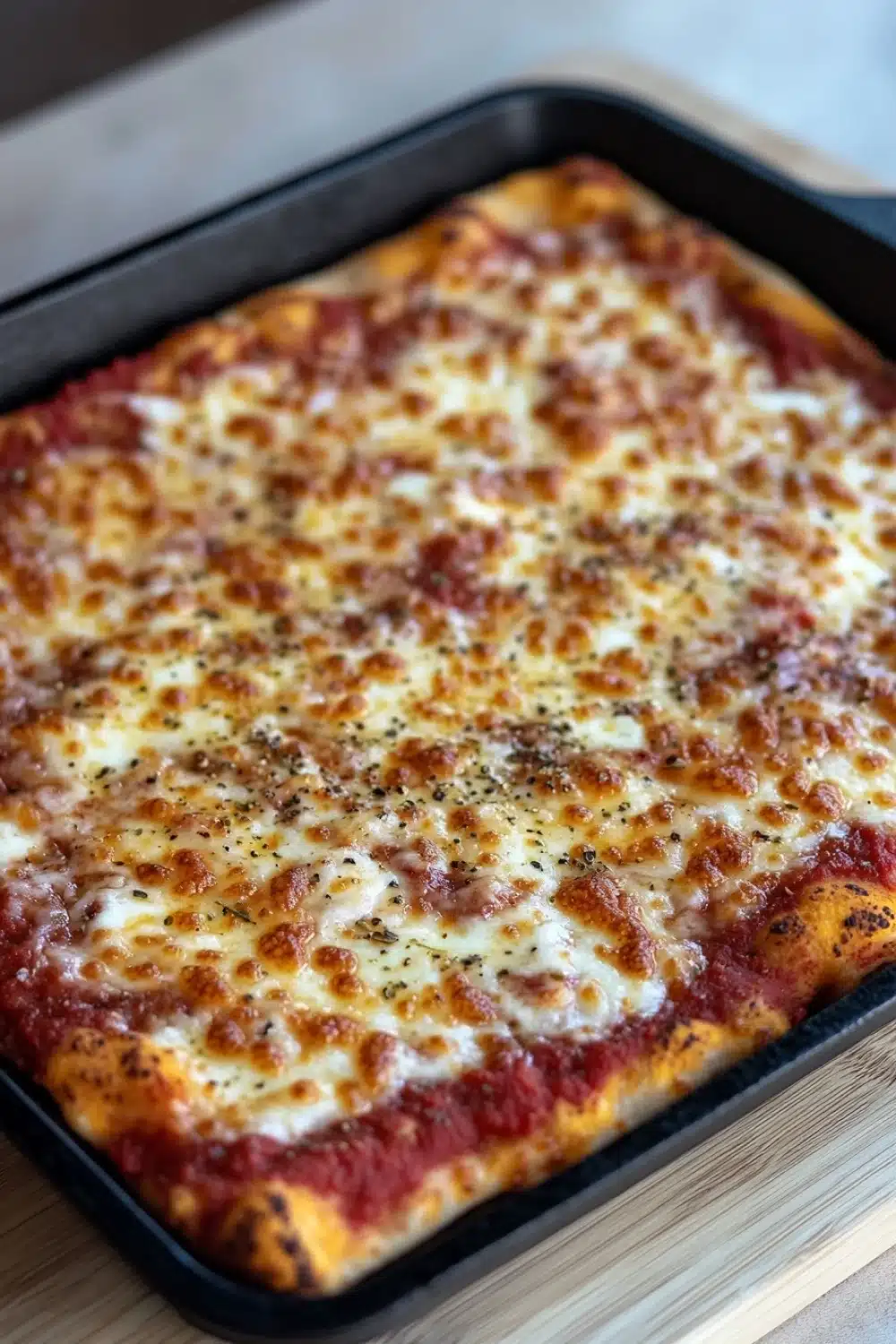
Cast iron magic awaits.
There’s something about the way a cast iron skillet hugs dough—cradling it as it puffs and crisps—that transforms ordinary pizza night into a ritual. I remember the first time I tried pressing that thick, airy Detroit-style dough into my skillet. It resisted, stubborn as a mule, until I gave it the respectful 5-minute rest it deserved. That’s the trick—the dough needs space to loosen up, just like a good jam session before the band kicks in.
That caramelized cheese edge? It’s the pièce de résistance, the signature crust that crackles with every bite. The brick cheese melts into a golden moat around the dough, locking in moisture while crisping to a savory crunch that’s borderline addictive. Slapping those thick tomato sauce stripes on top feels almost rebellious—breaking pizza norms, one stripe at a time.
Trust me, this isn’t just pizza. It’s a hands-on, rolling-up-your-sleeves kind of joy. No shortcuts, just straightforward, honest baking that rewards patience with every bite. Ready to get your hands dirty and taste the Detroit street food staple right in your kitchen?
If you’re a fan of hearty, cheesy pies, don’t miss our guide on Mastering Chicago Deep Dish Pizza in a Cast Iron Skillet for some amazing inspiration beyond Detroit style pizza in cast iron.
Real Life Wins with Detroit Style Pizza in Cast Iron
- That crust? Crunch city. The cast iron bakes it to golden perfection—crispy edges, pillowy inside. No soggy bottom blues here.
- Cheese edges caramelize right against the skillet walls, giving you that iconic Detroit-style ‘frico’ crust—like a little cheesy moat around your pizza. Game changer.
- The thick, airy dough soaks up sauce without turning floppy. Each bite’s a balanced punch of tangy tomato and melty cheese—no sad sauce puddles allowed.
- Cast iron keeps heat steady and even—no hot spots, no burnt edges. Your pizza bakes like a pro, every single time. Perfect for impressing your crew.
- Leftovers reheat like a charm—just a quick skillet warm-up brings back that fresh-out-the-oven crunch and fuzziness. Pizza day, two days later? Nailed it.

Detroit Style Pizza in Cast Iron
- Total Time: 45 minutes
- Yield: 4 1x
Description
A crispy, cheesy Detroit style pizza baked in a cast iron skillet, featuring a thick, airy crust with a caramelized cheese edge and a rich tomato sauce topping.
Ingredients
2 1/4 teaspoons active dry yeast (one 0.25-ounce packet)
1 1/2 cups warm water (about 110°F)
3 1/2 cups bread flour
1 teaspoon salt
1 tablespoon olive oil, plus extra for the skillet
2 cups shredded brick cheese or a blend of mozzarella and Monterey Jack cheese
1 cup pizza sauce (preferably a simple tomato sauce with garlic and herbs)
1 teaspoon dried oregano
1/2 teaspoon garlic powder
1/4 teaspoon crushed red pepper flakes (optional)
Instructions
In a small bowl, dissolve the active dry yeast in warm water. Let it sit for 5 minutes until foamy.
In a large mixing bowl, combine the bread flour and salt. Add the yeast mixture and 1 tablespoon of olive oil. Stir until a rough dough forms.
Turn the dough onto a floured surface and knead for about 8 minutes until smooth and elastic. Alternatively, use a stand mixer with a dough hook for 5-6 minutes.
Place the dough in a lightly oiled bowl, cover with plastic wrap or a clean towel, and let it rise in a warm place for 1 to 1.5 hours until doubled in size.
Preheat your oven to 500°F (260°C) and place a rack in the middle position.
Generously oil a 10-inch cast iron skillet with olive oil.
Punch down the risen dough and transfer it to the skillet. Use your fingers to gently stretch and press the dough to the edges of the skillet. If it resists, let it rest for 5 minutes and try again.
Sprinkle the shredded brick cheese evenly over the dough, making sure to cover the edges to create a caramelized crust.
Bake the pizza in the preheated oven for 12-15 minutes until the cheese is melted and bubbly and the crust is golden brown.
Remove the skillet from the oven and spoon the pizza sauce evenly over the cheese in three thick stripes across the pizza.
Sprinkle dried oregano, garlic powder, and crushed red pepper flakes over the sauce.
Return the pizza to the oven and bake for an additional 8-10 minutes until the sauce is heated through and slightly thickened.
Remove from the oven and let the pizza cool for 5 minutes before slicing and serving.
- Prep Time: 20 minutes
- Cook Time: 25 minutes
Explore more:
Dinner Recipes
Mastering Detroit Style Pizza in Cast Iron: From Dough to Devilishly Crispy Edges
The Dough Dance: Why Bread Flour and Warm Water Matter
When it comes to Detroit style pizza, the dough isn’t just a base—it’s the main event. Bread flour is the unsung hero here, packing in the gluten to create that airy, chewy texture that defines this style. Using all-purpose flour? Nah—your crust will turn out flat and sad, like a pizza that missed its calling. Warm water, around 110°F, wakes the yeast from its slumber without scorching it. This gentle nudge gets the yeast buzzing, creating those lovely bubbles that lift the dough sky-high during the rise. Ever had that stubborn dough that just won’t stretch? That’s your cue to let it rest—think of it like giving a tired runner a breather before the last sprint. Trust me, patience here pays off big time.
Cheese Goes Rogue: Caramelized Edges in Cast Iron Skillet
Here’s the trick: load the skillet with olive oil—don’t be shy—and press your dough right to the edges. Then sprinkle that shredded brick cheese not just on top, but all the way to the rim. Why? Because as the cheese melts, it creeps over the edge and fries against the hot skillet, forming a crispy, golden crust that’s pure magic. It’s like the skillet and cheese team up to create the pizza’s armor. The cast iron’s even heat distribution makes this happen better than any pizza stone or baking sheet. I learned this the hard way—my first attempt on a regular pan was a soggy mess, no matter how much cheese I piled on. Cast iron’s the real MVP here, turning cheese into a crust weapon.
Fixing the Flop: When Your Crust Refuses to Rise or Crisp
So your dough is acting like a wallflower and won’t puff up? First, check your yeast. If it’s past its prime or the water’s too hot or cold, the yeast’s toast. Also, that rise time—don’t skip it. One hour in a warm spot is non-negotiable. I keep my oven light on and the door slightly cracked—instant proofing box. For the crust that stubbornly refuses to crisp, crank that heat. 500°F isn’t just a number—it’s the secret to that crunch. Also, be generous with your oil. A slick skillet is a happy skillet, preventing sticking and helping the crust fry up just right. And don’t crowd the cheese—too much moisture can sabotage your crisp. Bottom line? Heat, oil, and patience are your three amigos for a pizza that snaps when you bite.
Detroit Style Pizza in Cast Iron FAQs
Q1: Can I use regular mozzarella instead of brick cheese?
Yes, you can swap brick cheese with a blend of mozzarella and Monterey Jack to mimic that melty, slightly salty vibe Detroit style is famous for. Just keep the cheese ratio similar for best results.
Q2: Do I really need a cast iron skillet?
Short answer: No. But here’s the kicker—the cast iron skillet is the key player for that crispy, caramelized cheese edge that’s the hallmark of Detroit style pizza. Using a regular pan won’t give you that signature crust or the even heat distribution needed.
Q3: How long should I let the dough rise if my kitchen is cold?
Cold kitchens are dough killers. If your place is on the chilly side, you’ll want to let the dough rise closer to 2 hours or until it doubles in size. Alternatively, pop the bowl in a turned-off oven with the light on—instant dough spa.
Q4: Can I prepare the dough ahead of time?
Absolutely! Make your dough the day before, punch it down, cover it tightly, and refrigerate. When ready to bake, let it come to room temp and give it a gentle stretch before assembling. This slow fermentation actually adds more flavor—win-win.
Q5: What’s the secret to that thick, airy crust?
It’s all about the dough hydration and the knead. Using bread flour provides higher gluten, creating that chewy, airy structure. And don’t skimp on kneading—5-8 minutes to develop enough gluten is what sets this crust apart from your average pie.