
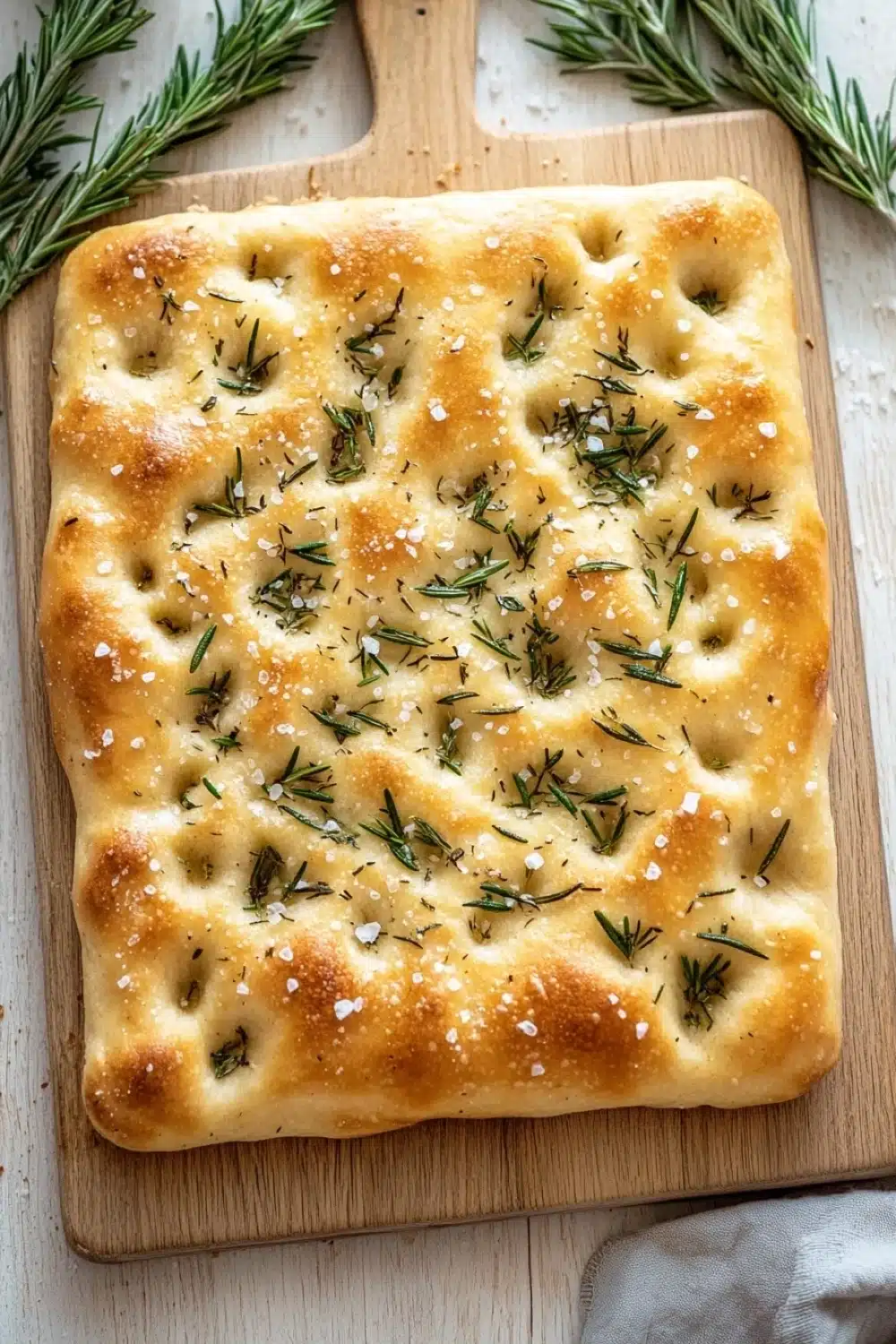
Let’s get hands-on.
There’s nothing quite like the feeling of fresh dough slipping through your fingers—sticky, soft, and full of promise. The kitchen fills with the earthy scent of rosemary and olive oil as the dough rises, defying the cold with a warm, yeasty puff. It’s that magic moment where patience pays off, and every fingertip dimple sets the stage for a crust that crackles with just the right crunch.
Focaccia isn’t just bread; it’s a vibe. I remember the first time I nailed the perfect golden crust, the kind that’s just oily enough to make you swoon yet balanced with sea salt crystals that pop like little flavor fireworks. It’s a simple recipe—flour, yeast, water, and a dash of TLC—but it’s all in the details. Get the dough too stiff, and you’re in for a brick; too slack, and it won’t hold its shape.
Ready to roll up your sleeves? This classic rosemary focaccia bread recipe is your ticket to baking bliss—whether you’re layering it into sandwiches or tearing off pieces to snack with your favorite spread. Trust me, once you get the hang of this, you’ll never settle for store-bought again.
For a delicious twist, try pairing your favorite crockpot chicken pasta recipes with some homemade focaccia bread for the perfect comfort meal.
Why You’ll Actually Use This Classic Rosemary Focaccia Recipe
- Whips up in just 40 minutes total—perfect for last-minute dinner plans or when you’re running low on bread but high on hunger.
- The rosemary and sea salt combo isn’t just for show; it packs that punch that wakes up your taste buds without needing fancy sauces or dips.
- Fluffy yet sturdy—this bread holds up like a champ as sandwich bread, so no soggy messes here when you stack on your favorite fillings.
- Leftovers? No sweat. It keeps well at room temp for a couple days or freezes like a dream, so you can snack smart without wasting food.
- Making it is oddly therapeutic. Kneading that dough, dimpling the surface—there’s something almost zen about it that turns a simple recipe into a feel-good kitchen ritual.
Classic Rosemary Focaccia Bread
- Total Time: 40 minutes
- Yield: 8 slices 1x
Description
A fragrant and fluffy classic Italian focaccia bread topped with fresh rosemary and sea salt. Perfect as a side dish, sandwich bread, or snack.
Ingredients
3 1/2 cups (420 grams) all-purpose flour, plus extra for dusting
1 tablespoon granulated sugar
2 teaspoons active dry yeast
1 1/4 teaspoons fine sea salt
1 1/3 cups (320 ml) warm water, about 110°F (43°C)
1/4 cup (60 ml) extra virgin olive oil, plus 2 tablespoons for drizzling
2 tablespoons fresh rosemary leaves, chopped
1 teaspoon coarse sea salt (for topping)
Instructions
In a small bowl, combine the warm water, sugar, and active dry yeast. Stir gently and let it sit for 5 to 10 minutes until the mixture becomes frothy.
In a large mixing bowl, whisk together the all-purpose flour and fine sea salt.
Make a well in the center of the dry ingredients and pour in the yeast mixture and 1/4 cup olive oil.
Using a wooden spoon or your hands, mix until a sticky dough forms.
Turn the dough onto a lightly floured surface and knead for about 8 to 10 minutes until smooth and elastic. Add small amounts of flour if the dough is too sticky, but keep it soft.
Lightly oil a large bowl with olive oil. Place the dough in the bowl and turn it to coat with oil. Cover the bowl with a clean kitchen towel or plastic wrap and let it rise in a warm place for 1 to 1 1/2 hours, or until doubled in size.
Preheat your oven to 425°F (220°C).
Generously oil a 9×13-inch (23×33 cm) baking pan with olive oil.
Punch down the risen dough and transfer it to the prepared pan. Stretch and press the dough to fit the pan evenly.
Cover the dough again and let it rest for 20 minutes to puff slightly.
Using your fingertips, dimple the surface of the dough all over, pressing down about 1/2 inch deep.
Drizzle 2 tablespoons of olive oil evenly over the top of the dough.
Sprinkle the chopped fresh rosemary and coarse sea salt evenly on top.
Bake the focaccia in the preheated oven for 20 to 25 minutes, or until golden brown and cooked through.
Remove from the oven and let it cool in the pan for 10 minutes before transferring to a wire rack.
Slice into 8 pieces and serve warm or at room temperature.
- Prep Time: 15 minutes
- Cook Time: 25 minutes
Explore more:
Lunch Recipes
Classic Rosemary Focaccia Bread: Tricks and Tweaks for the Perfect Slice
The Flour Swap That Changes Everything
I’ve tinkered endlessly with flours in my kitchen—I’m convinced the right one can make or break your focaccia game. All-purpose flour is the go-to here, but hear me out: try swapping half of it for bread flour if you want a chewier texture with a sturdier crumb. The higher protein content amps up gluten development, giving those signature springy pockets we all crave. But if you’re feeling adventurous, a touch of whole wheat (about 1/4 cup) can add a subtle nuttiness that pairs beautifully with rosemary’s earthiness. Just don’t go overboard—too much whole wheat and your dough turns into a dense brick, no lie.
Why Those Dimpling Fingers Matter More Than You Think
Get ready for a little dough massage therapy. When you press your fingertips into the dough for those dimples, you’re not just making a rustic pattern. You’re creating little pockets that catch olive oil and juices, preventing the bread from puffing up like a balloon and instead encouraging that classic golden, uneven surface you see in authentic focaccias. Skip this step, and you might end up with a flat, boring slab or an oddly puffed-up loaf—neither of which screams “Italian street food.” I always tell folks: don’t be shy, dig deep! Those dimples are your bread’s personality.
Pro tip—use your fingertips, not your knuckles. Knuckles can tear the dough, which leads to deflated spots after baking. Finger dimpling is the OG technique; it’s all about gentle but decisive pressure.
Rescuing a Soggy Bottom: Fix Your Focaccia Fails
Ever pulled your focaccia out only to find it soggy underneath? A bummer for sure. Here’s why that happens—and how to dodge it next time.
First, too much oil pooling in the pan is often the culprit. It’s tempting to douse the pan with olive oil (I’m guilty!), but excess oil combined with underbaked dough creates a soggy mess. Solution? Spread a thin, even layer—not a puddle. Also, bake on the middle rack for balanced heat circulation. Bottom racks can cause uneven cooking and sogginess.
And if you forget to preheat the oven properly? Your focaccia might absorb oil instead of crisping right away. Always crank that oven to a steady 425°F before sliding the pan in. Patience here pays off.
Last rescue trick: if your bread comes out slightly underdone, slap it back in the oven for 5-7 minutes. This extra time firms up the bottom crust while keeping the inside fluffy—a quick fix for when time runs out.
Classic Rosemary Focaccia Bread FAQs
A: Yes, you can! Instant yeast works faster, so you might need to shorten the rising time a bit—keep an eye on the dough, not the clock.
A: Fresh rosemary definitely packs more punch, but dried will do in a pinch. Just sprinkle a little less since dried herbs are more concentrated.
A: Use your fingertips, press firmly but gently about half an inch deep all over the dough. It helps trap the olive oil and gives focaccia that signature look and texture. If your fingers stick, dip them in olive oil before pressing.
A: Absolutely! This focaccia’s fluffy yet sturdy crumb holds up well to sandwich fillings without falling apart. I’ve slapped turkey and provolone between slices more times than I can count—no sogginess here.
A: Yes, you can refrigerate the dough after the first rise. Just cover it tightly and let it chill overnight. When ready, bring it back to room temperature, shape it, and proceed with the second rise before baking. It’s a great way to save time on a busy day.