
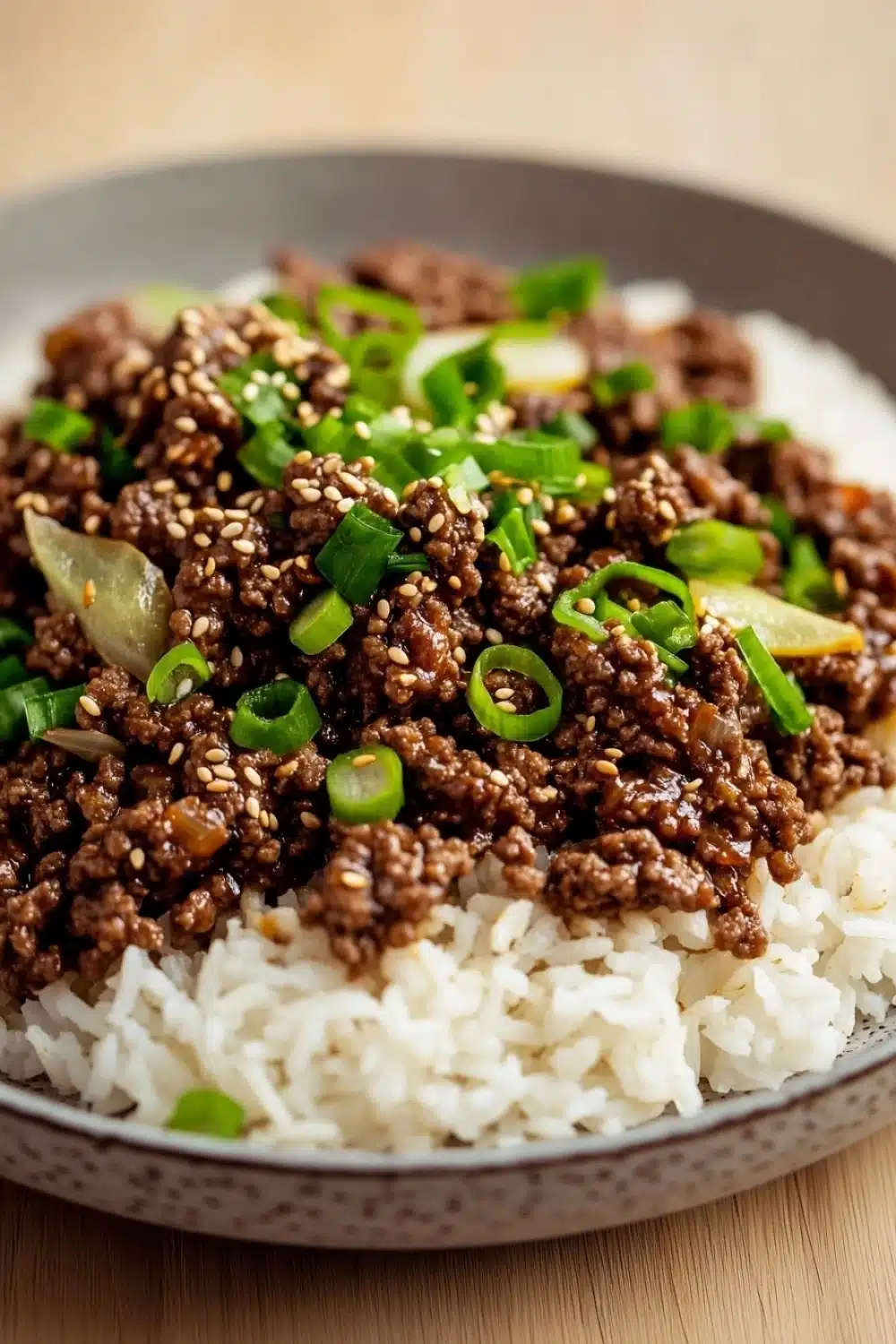
Mealtime panic? Say no more.
There’s something seriously satisfying about a one-pan meal that screams flavor without the fuss. Tonight, I tossed ground beef into a hot skillet, the garlic and ginger hitting the pan with that irresistible sizzle that always promises something good. The soy sauce and brown sugar tangoed, thickening into a glossy sauce that clung to every morsel like a tight hug.
This Korean beef skillet isn’t just dinner—it’s a no-nonsense, weeknight warrior. The rice waits patiently, ready to soak up whatever’s left behind, while green onions and toasted sesame seeds bring that final touch of crunch and freshness. When I’m short on time but craving a dish that punches above its weight, this skillet always delivers the goods.
Get ready to dive in—because once this hits your table, you’ll be hooked.
If you’re looking for a quick and delicious meal, try this korean beef skillet recipe that’s perfect for busy nights.
Real-Life Perks of Cooking Korean Beef Skillet
- Ready in under 30 minutes—perfect for those wild weeknights when you’re juggling work, kids, and somehow still need to eat.
- Ground beef keeps things wallet-friendly without skimping on flavor; no need to break the bank to get serious taste.
- The sauce? A killer combo of savory, sweet, and spicy that hits all the right spots, so you never get stuck in the boring dinner rut.
- One-skillet wonder means minimal cleanup—score! Almost feels like cheating on that dreaded dish duty.
- Versatile as hell: swap rice for noodles or toss in extra veggies if you’re feeling green-thumb adventurous.

Korean Beef Skillet
- Total Time: 25 minutes
- Yield: 4 1x
Description
A quick and flavorful Korean beef skillet recipe featuring ground beef cooked with garlic, ginger, and a savory-sweet sauce, served over steamed rice and garnished with green onions and sesame seeds.
Ingredients
1 pound ground beef
3 cloves garlic, minced
1 tablespoon fresh ginger, minced
1/4 cup low sodium soy sauce
2 tablespoons brown sugar
1 tablespoon sesame oil
1/2 teaspoon crushed red pepper flakes
1/4 teaspoon black pepper
2 green onions, thinly sliced
1 tablespoon toasted sesame seeds
3 cups cooked white rice
Instructions
Heat a large skillet over medium-high heat.
Add the ground beef to the skillet and cook, breaking it apart with a spatula, until browned and cooked through, about 6-8 minutes.
Drain excess fat from the skillet if necessary.
Add the minced garlic and minced ginger to the beef and cook for 1-2 minutes until fragrant.
In a small bowl, whisk together the soy sauce, brown sugar, sesame oil, crushed red pepper flakes, and black pepper.
Pour the sauce mixture over the cooked beef in the skillet and stir to combine.
Cook for an additional 3-4 minutes, allowing the sauce to thicken slightly and coat the beef.
Remove the skillet from heat.
Serve the Korean beef over cooked white rice.
Garnish with sliced green onions and toasted sesame seeds before serving.
- Prep Time: 10 minutes
- Cook Time: 15 minutes
Explore more:
Dinner Recipes
Mastering Your Korean Beef Skillet: Tips, Tricks, and Fixes
The Sauce That Holds It All Together — Why Balance Is Everything
This dish hinges on one solid truth: the sauce isn’t just a topping; it’s the heartbeat of the whole skillet. Soy sauce brings saltiness; brown sugar cuts through with a kiss of molasses sweetness. Sesame oil? That nutty whisper you don’t want to skip. The crushed red pepper flakes add a cheeky kick, but beware—too much and you’ll drown the subtle ginger and garlic. I’ve learned the hard way that rushing this step ends in a flat, one-note mess. Whisk those ingredients well, then let the beef soak it up like a parched wanderer finding an oasis. The beef needs time to glug down that sauce, to get properly cozy in it before you call it done.
Ingredient Swaps That Won’t Kill Your Vibe
Ground beef is the OG here, but sometimes the butcher’s choices don’t match your mood or budget. Try ground pork or turkey for a leaner spin. Goat for the bold. Don’t have fresh ginger? Ground ginger powder can step in—just dial it back by half to avoid that dusty vibe. No sesame oil? Toast some sesame seeds and crush them to release oils, then stir ’em in at the end. Soy sauce feels too salty? Splash in a bit of coconut aminos for a sweeter, less brassy note. Remember: the key is walking a tightrope between salty, sweet, and spicy—adjusting one means tweaking the others.
When Your Skillet Turns Into a Soggy Mess — Quick Fixes
Ever been jazzed to dig into this Korean beef only to find it swimming in liquid? It’s a rookie move: the sauce hasn’t reduced enough. Next time, crank the heat after adding the sauce and let it bubble away—don’t walk away! Stir frequently; this speeds up reduction and keeps things from sticking. If you’re already in the soggy soup zone, drop the heat and keep stirring—eventually, the excess moisture will evaporate. Another clutch move: a quick sear before adding sauce gives you a crispy edge that cuts sogginess. And trust me, that little crunch is like a mic drop for your taste buds.
Korean Beef Skillet: FAQ
Absolutely! Ground turkey works fine, but expect a leaner, milder flavor. You might want to add a splash more soy sauce to pump up the salty notes.
Yes and no. The crushed red pepper flakes give a gentle kick—not enough to clear sinuses but enough to keep things interesting. Adjust up or down depending on your heat tolerance.
Sure can! Cook it up, cool it down, then store it in the fridge. When ready, reheat gently on the stove to keep that beef juicy and the sauce thick and clingy.
White rice is classic here, fluffy and absorbing. But jasmine or short-grain rice add a subtle fragrance and a stickier texture that really hugs the beef. I’m partial to jasmine for a little extra oomph.
No. This isn’t a good candidate for the freezer because the beef texture can get weird and the sauce might separate. Best to eat within a few days.