
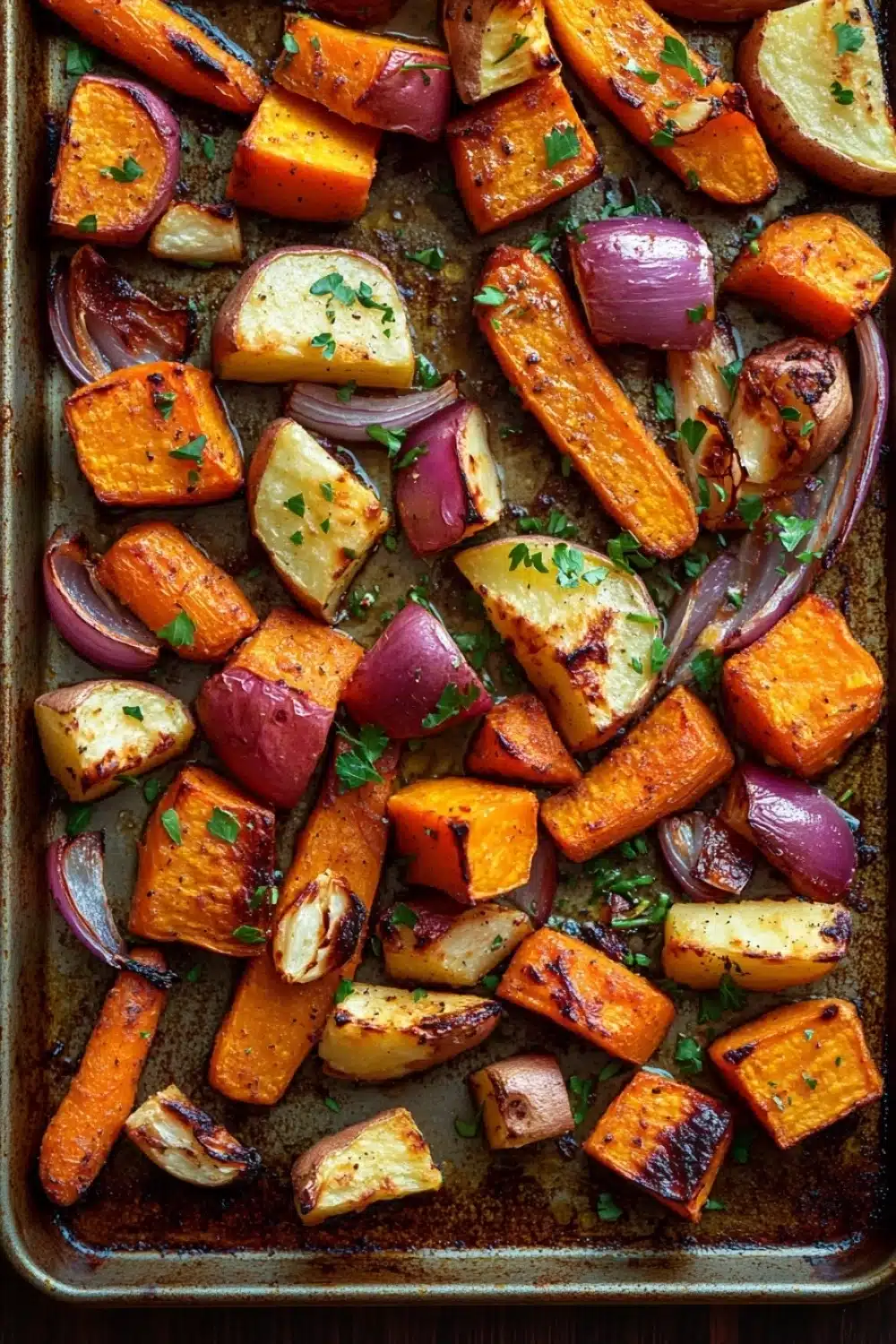
Root-to-roast magic, right here.
There’s something about the way Greek herbs—oregano, thyme, rosemary—wrap themselves around hearty root vegetables that stops me mid-scroll and drags me straight into the kitchen. I’m talking about those earthy carrots and parsnips, sweet potatoes with their creamy soul, and red potatoes that crisp just right at the edges. Tossed together with garlic and cumin, then roasted till golden, this dish is a proper crowd-pleaser, whether as a main or a sidekick.
I remember the first time I nailed this recipe—my oven was humming, the house filled with that unmistakable aroma of Mediterranean sunshine captured in a tray. Those forty-five minutes felt like forever, but oh, the payoff: a plateful of colors and textures that hit all the right notes. You don’t need to be a kitchen wizard for this; it’s all about letting the ingredients do their thing, dressed up in herbs and lemon juice zest. The rustic charm of this dish gets under your skin, making you want to dig in straight from the oven.
Trust me, this isn’t just roasting vegetables—it’s a little Mediterranean journey on a baking sheet.
Looking for a hearty side dish? Try our Apple Chicken Sausage and Harvest Vegetable Skillet Recipe for Cozy Dinners that pairs perfectly with greek roasted root vegetables.
Real Life Benefits of Greek Roasted Root Vegetables
- Hearty and filling—perfect when you want something that sticks to your ribs without weighing you down.
- A rainbow of root veggies means you’re packing a serious nutrient punch; think vitamins A and C, plus fiber to keep things moving smoothly.
- Prepping takes just 15 minutes. You can toss everything together while the kids finish homework or during a quick coffee break.
- Oven magic does the heavy lifting—roasting brings out natural sweetness and a slight char that’s pure kitchen street cred.
- Leftovers? No sweat. These reheat beautifully, making weekday lunches or impromptu dinners a breeze without feeling like reheated slop.

Greek Roasted Root Vegetables
- Total Time: 1 hour
- Yield: 6 1x
Description
A flavorful and hearty dish featuring a medley of roasted root vegetables tossed with Greek-inspired herbs and spices, perfect as a side or a vegetarian main.
Ingredients
4 medium carrots, peeled and cut into 1-inch chunks
3 medium parsnips, peeled and cut into 1-inch chunks
2 medium sweet potatoes, peeled and cut into 1-inch chunks
3 medium red potatoes, cut into 1-inch chunks
1 large red onion, peeled and cut into wedges
4 cloves garlic, minced
3 tablespoons extra virgin olive oil
1 tablespoon dried oregano
1 teaspoon dried thyme
1 teaspoon dried rosemary, crushed
1 teaspoon ground cumin
1 teaspoon kosher salt
½ teaspoon freshly ground black pepper
2 tablespoons fresh lemon juice
2 tablespoons chopped fresh parsley
Instructions
Preheat the oven to 425°F (220°C).
In a large mixing bowl, combine the carrots, parsnips, sweet potatoes, red potatoes, and red onion.
Add the minced garlic, olive oil, dried oregano, dried thyme, crushed rosemary, ground cumin, kosher salt, and black pepper to the bowl.
Toss all the vegetables and seasonings together until they are evenly coated with the oil and herbs.
Spread the vegetables in a single layer on a large baking sheet lined with parchment paper or a silicone baking mat.
Roast the vegetables in the preheated oven for 40 to 45 minutes, stirring once halfway through, until they are tender and golden brown at the edges.
Remove the vegetables from the oven and transfer them to a serving bowl.
Drizzle the fresh lemon juice over the roasted vegetables and sprinkle with chopped fresh parsley.
Gently toss to combine and serve warm.
- Prep Time: 15 minutes
- Cook Time: 45 minutes
Explore more:
Dinner Recipes
Mastering Greek Roasted Root Vegetables
The Swap Shop: When Roots Need a Remix
Let’s talk swaps—because being locked into one veggie lineup is so last season. If you’re not vibing with parsnips or sweet potatoes, consider rutabagas or turnips stepping into the spotlight. These cousins bring a peppery kick and firmness that won’t turn to mush in the roasting heat. Red onions? Yellow or shallots work just as well, giving that sulfurous snap with a touch of sweetness. And don’t pigeonhole yourself into olive oil—avocado oil or even walnut oil add a nutty twist that plays nicely with those Greek spices. The trick is keeping that 1-inch chunk size consistent so everything cooks evenly. Trust me, chopping unevenly is the rookie mistake that blows the whole roast.
One time, I tried tossing in some celeriac for funk and, boy, that altered the flavor game entirely—but in a good way. The root medley can be a playground; just keep your herb and spice game strong to keep the Greek vibe alive.
Why the Roasting Ritual Works: More Than Just Heat
Roasting root vegetables at 425°F isn’t just about crisping edges—it’s a chemistry class disguised as dinner. At this high temp, the Maillard reaction kicks in—a browning process that builds complex, smoky flavors while caramelizing the natural sugars buried inside each chunk. Without enough heat, you get limp veggies with no personality. Too much, and your batch turns into charcoal chic. Roasting also dries the surface slightly, concentrating flavors and creating those irresistible golden-brown nooks. Tossing halfway through? That’s your secret weapon against soggy bottoms. It redistributes the heat and oil, ensuring every piece hits that crispy-tender sweet spot.
Herbs like oregano and rosemary are like your Greek chorus—they sing differently when roasted, mellowing out and mingling with the cumin to give a warm, piney-earthy backbone. Lemon juice added at the end? That’s your palate awakener, cutting through the richness and adding a zesty punch that makes the dish sing. The fresh parsley is the final curtain call—bright, herbal freshness that stops the roast from becoming too heavy.
Rescue Mission: Fixing the Common Roasted Veggie Fails
Burnt edges? Too dry? Soggy mush? We’ve all been there.
First up—burnt edges usually mean oil distribution went sideways or the oven temp is a sneaky denier. Quickly toss your veggies with oil and seasoning before roasting; dry patches get crispy to a fault. Also, check your oven’s thermostat with a cheap oven thermometer—sometimes it runs hotter than the dial says.
Soggy veggies? That’s a telltale sign of overcrowding. When your veggies are elbow-to-elbow on the pan, they steam instead of roast. Give them breathing room; single layer isn’t just a suggestion—it’s gospel.
And if you bite into a chunk that’s mushier than grandma’s applesauce, you likely have uneven cutting or mixed cooking times. Smaller roots like carrots roast faster than potatoes, so either cut the bigger pieces smaller or add the quicker-cooking veggies partway through.
One hack I live by? After roasting, give your pan a quick broil for just 2-3 minutes—watch like a hawk—to char the edges further. Instant flavor boost and texture win. Just don’t blink.
Greek Roasted Root Vegetables FAQ
- Can I use frozen root vegetables?
- Yes, but I’d recommend thawing and patting them dry first to avoid soggy roast. Frozen veggies can release extra moisture, which messes with that coveted crisp edge.
- What’s the best oil for roasting?
- Extra virgin olive oil is the go-to here. It holds up well at 425°F and complements those Greek herbs perfectly. Skip cheap oils—they won’t give you the same flavor punch.
- Can I prep this ahead of time?
- Absolutely. Toss your chopped veggies with the herbs and oil, cover, and refrigerate overnight. Roast fresh when ready. Just remember, cold veggies take a few minutes longer in the oven.
- Any tips for even roasting?
- Sure thing. Give your veggies a good spread in a single layer—no crowding the pan. Stir halfway through to get that golden-brown love on all sides. Crowded pans steam instead of roast, and that’s no bueno.
- Is this dish gluten-free?
- Yes! All ingredients here are naturally gluten-free, making it safe for those avoiding gluten. Just ensure your seasonings don’t contain hidden gluten additives.