
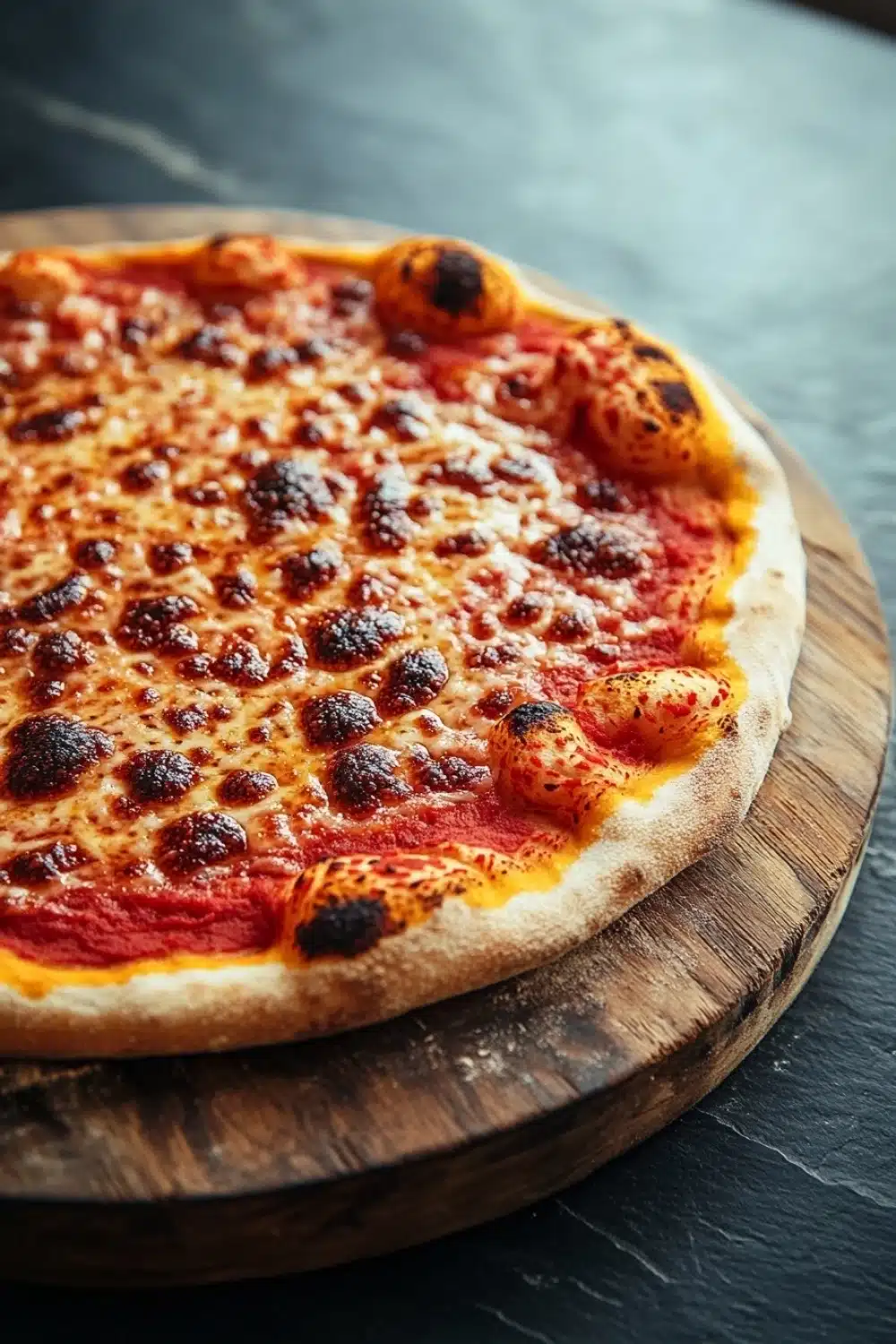
Thin but mighty.
There’s a certain rhythm to making pizza dough—a dance of flour dust and sticky fingers that I swear is half the joy. The kitchen fills with this warm, yeasty aroma, promising something special. You mix, knead, and wait, watching the dough puff up like it’s ready to take on the world.
Chicago style usually screams deep dish, but that thin crust? It’s a whole different beast. Crisp edges, a sturdy base—perfect for a pie that folds just right, no flimsy bottom here. I remember the first time I nailed this dough; it was like hitting the jackpot without leaving home, the kind of win that makes you wanna shout, “That’s how you do it!”
This recipe’s no fluff—just straightforward ingredients and a little elbow grease. Roll it out thin, slap on your favorite toppings, and you’re set for a pizza night that’s anything but ordinary.
If you’re looking for a delicious alternative, check out our King Arthur Gluten Free Pizza Crust: Crispy, Chewy, and Easy to Make recipe for a tasty twist on chicago style thin crust pizza dough.
Why Chicago Style Thin Crust Pizza Dough Works Wonders in Real Life
- Effortless prep: You’re looking at just 15 minutes of hands-on time—no rocket science, just straightforward mixing and kneading.
- Crunch with bite: This dough crisps up thin and firm, holding toppings without turning soggy—a big win for messy eaters and neat freaks alike.
- Flexible portions: Make four personal 12-inch pizzas or keep it whole for one big pie—your call, your pizza playground.
- Stay-ahead storage: Prep in advance, refrigerate or freeze, and have dough ready to roll whenever the pizza craving hits (which, let’s be honest, is often).
- Simple ingredients: No weird add-ons here—just yeast, flour, water, sugar, salt, and olive oil. Classic pantry staples that don’t break the bank or your brain.

Chicago Style Thin Crust Pizza Dough
- Total Time: 15 minutes
- Yield: 4 (one 12-inch pizza each) 1x
Description
This Chicago Style Thin Crust Pizza Dough recipe yields a crisp, thin, and flavorful crust perfect for authentic Chicago-style pizzas. The dough is easy to prepare and creates a sturdy base for your favorite toppings.
Ingredients
2 1/4 teaspoons active dry yeast (1 packet)
1 1/2 cups warm water (110°F/43°C)
1 tablespoon granulated sugar
3 1/4 cups all-purpose flour, plus extra for dusting
1 teaspoon salt
2 tablespoons olive oil, plus extra for coating the bowl
Instructions
In a small bowl, combine the warm water, active dry yeast, and granulated sugar. Stir gently and let it sit for 5 to 10 minutes until the mixture is foamy.
In a large mixing bowl, whisk together the all-purpose flour and salt.
Make a well in the center of the flour mixture and pour in the yeast mixture and 2 tablespoons of olive oil.
Using a wooden spoon or your hands, mix the ingredients until a rough dough forms.
Turn the dough out onto a lightly floured surface and knead for about 8 to 10 minutes until the dough is smooth and elastic. Add small amounts of flour if the dough is too sticky.
Lightly coat a large bowl with olive oil. Place the dough in the bowl and turn it to coat all sides with oil.
Cover the bowl with a clean kitchen towel or plastic wrap and let the dough rise in a warm, draft-free area for about 1 hour, or until it has doubled in size.
Once risen, punch down the dough to release air bubbles and turn it out onto a floured surface.
Divide the dough into 4 equal portions for individual 12-inch pizzas or keep whole for a larger pizza.
Roll out the dough thinly to your desired thickness, ideally about 1/8 inch thick, to achieve the classic Chicago thin crust.
Your Chicago Style Thin Crust Pizza Dough is now ready to be topped and baked according to your pizza recipe.
- Prep Time: 15 minutes
- Cook Time: 0 minutes
Explore more:
Dinner Recipes
Mastering Chicago Style Thin Crust Pizza Dough
The Secret to That Golden Crust
Let me spill some tea: the key to that signature Chicago thin crust lies in hitting the sweet spot between thickness and crispiness. Rolling the dough to about 1/8 inch is crucial—any thicker, and you risk ending up with a soggy base that can’t hold your toppings, any thinner, and it turns brittle as a dry cracker. I’ve learned the hard way that using a rolling pin dusted with flour—not too much, though, or you’ll choke the dough—helps achieve that perfect stretchy thinness. Plus, olive oil in the dough and coating the bowl adds just enough fat to keep it tender yet sturdy. That oil is your secret weapon—don’t skimp on it. When you bake, that thin crust crisps up beautifully, the edges caramelizing into what I call “pizza gold.”
Why Letting Dough Rise Matters—More Than Just Time
Patience, my friend. It’s not just a virtue; it’s the difference between a dough that’s bland and one that’s bursting with flavor. The yeast acts like a tiny alchemist, turning sugar and warmth into bubbles and that unmistakable doughy aroma. Skipping or rushing this step? Rookie mistake—your crust will be dense, tough, and sad. I remember once trying to cut corners and the dough barely puffed, ending up more like a cracker than a crust. The hour-long rise in a warm, draft-free spot lets the gluten relax and those yeast bubbles do their thing, resulting in that light, airy texture beneath your toppings. Pro tip: if your kitchen’s cold, pop the bowl in the oven with just the light on—perfect temp for a steady rise.
Fixing Dough Disasters—Sticky, Tough, or Flat? Here’s the Playbook
Stuck with sticky dough that clings to everything? Chill it for 15 minutes—rest does wonders. Also, sprinkle flour sparingly during kneading; too much turns your crust into a brick. Tough dough? You overworked it—let it rest longer before shaping. Flat, lifeless dough after rising? Could be dead yeast or water too hot, killing those tiny workhorses. Always proof your yeast first; that foamy surface means it’s alive and kicking. And for the love of deep dish—no fans or drafts during rising, or your dough’ll deflate faster than a popped balloon. These fixes have saved me from many a pizza night disaster, so keep them in your back pocket.
Chicago Style Thin Crust Pizza Dough FAQs
Can I use instant yeast instead of active dry yeast?
Yes, you can swap instant yeast for active dry yeast in this recipe. Use slightly less—about 2 teaspoons—and mix it directly with the flour since instant yeast doesn’t need to be proofed. It’ll speed things up and still get that crisp crust you’re after.
How thin should I roll out the dough?
Aim for about 1/8 inch thick. If you go too thick, you lose that signature snap and crunch of Chicago’s thin crust. A thin, consistent stretch is key, but don’t tear the dough—patch those holes like a pro. Remember, thin crust means you’ll want a sturdy base that holds toppings without sogginess.
What’s the best way to store leftover dough?
Wrap it tight with plastic wrap after oiling the surface lightly and pop it in the fridge for up to 2 days. If you want to stash it longer, freeze it in a freezer-safe bag for up to 3 months. Pro tip: let it thaw overnight in the fridge, then bring it to room temp before rolling out.
Does this dough recipe make enough for four 12-inch pizzas?
Yep. This recipe yields four equal portions perfect for 12-inch pizzas each—enough to feed a small crowd or save some for later.
Can I make the dough without olive oil?
No. Olive oil is crucial here—it helps develop the dough’s texture and prevents it from sticking. Skipping it will mess with the dough’s elasticity and final crunch. So, don’t ditch the oil.