
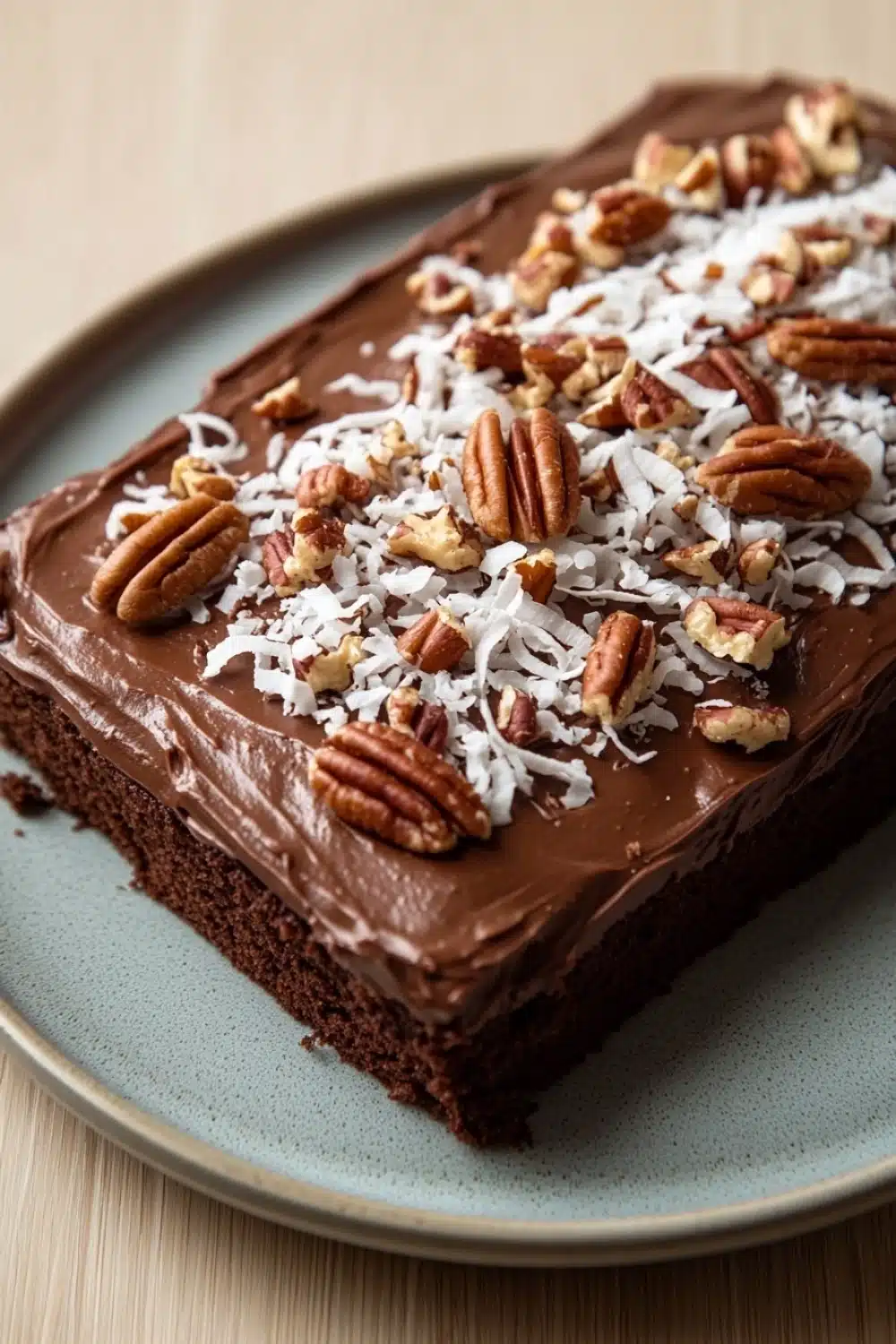
Chocolate magic in the making.
The kitchen hums with anticipation as I gather ingredients for a classic treat that never goes out of style—German chocolate sheet cake. It’s no secret that this cake has a cult following, and today, I’m diving headfirst into the rich, fudgy batter that promises to turn any gathering into a proper shindig. There’s something about the way the cocoa powder blends with butter and buttermilk that screams comfort and indulgence.
The real kicker? The coconut-pecan frosting—sticky, nutty, and golden brown—slathered on hot, melting slightly into the warm cake beneath. I remember my grandma’s kitchen, the air thick with that sweet, toasty aroma that could stop you dead in your tracks. If you want a cake that’s easy to whip up but packs serious punch, this sheet cake fits the bill perfectly.
This isn’t just dessert—it’s a slice of nostalgia with every bite.
If you’re craving a delicious treat, check out this Classic Chocolate Cake Normal Design: Simple, Rich, and Timeless for a perfect sheet cake German chocolate experience.
Real-Life Wins with German Chocolate Sheet Cake
- Feeds a crowd without the hassle—this sheet cake stretches to 12 generous servings, making it your go-to for potlucks or family dinners.
- The 50-minute total baking time means you can whip this up on a whim—even if you’re juggling work calls and dinner plans.
- Coconut and pecans on top? That’s not just frosting; it’s a crunchy, nutty jackpot that keeps every bite interesting and far from boring.
- Don’t sweat the leftovers—keeping it airtight at room temp for a couple of days keeps it tasting fresh like you just pulled it from the oven.
- Got a fridge? Great. This cake plays nice when chilled, too, and warming it up before serving revives that melt-in-your-mouth vibe perfectly.
German Chocolate Sheet Cake
- Total Time: 50 minutes
- Yield: 12 1x
Description
A rich and moist German Chocolate Sheet Cake topped with a classic coconut-pecan frosting. Perfect for gatherings and celebrations, this sheet cake combines chocolatey goodness with a sweet, nutty topping.
Ingredients
2 cups all-purpose flour
2 cups granulated sugar
1 teaspoon baking soda
1/2 teaspoon salt
1 cup unsweetened cocoa powder
1 cup unsalted butter
1 cup water
1/2 cup buttermilk
2 large eggs
1 teaspoon vanilla extract
1/2 cup vegetable oil
1 cup evaporated milk
1 1/2 cups granulated sugar
3 large egg yolks
1/2 cup unsalted butter
1 teaspoon vanilla extract
1 1/3 cups sweetened shredded coconut
1 cup chopped pecans
Instructions
Preheat the oven to 350°F (175°C). Grease and flour a 9×13 inch sheet pan.
In a large bowl, sift together the flour, sugar, baking soda, salt, and cocoa powder. Set aside.
In a medium saucepan, combine the butter and water. Bring to a boil over medium heat, stirring occasionally.
Pour the hot butter and water mixture over the dry ingredients. Stir until well combined.
Add the buttermilk, eggs, vanilla extract, and vegetable oil to the batter. Beat with an electric mixer on medium speed for 2 minutes until smooth.
Pour the batter into the prepared sheet pan and spread evenly.
Bake for 30 minutes or until a toothpick inserted into the center comes out clean.
While the cake bakes, prepare the frosting. In a medium saucepan, combine evaporated milk, granulated sugar, egg yolks, butter, and vanilla extract.
Cook over medium heat, stirring constantly, until the mixture thickens and turns golden brown, about 12 minutes.
Remove from heat and stir in shredded coconut and chopped pecans. Mix well.
When the cake is done, remove it from the oven and immediately spread the warm frosting evenly over the top.
Allow the cake to cool completely before slicing and serving.
- Prep Time: 20 minutes
- Cook Time: 30 minutes
Explore more:
Buzz in the Kitchen Recipes
German Chocolate Sheet Cake Masterclass
The Swap That Won’t Flop: Buttermilk’s Role in Moisture Magic
When I first tackled this German Chocolate Sheet Cake, I eyeballed the buttermilk like it was some fancy ingredient I’d skip. Big mistake. Buttermilk isn’t just a random splash of acidity—it’s the secret behind that tender crumb that refuses to dry out after a day or two. Swap it with regular milk and your cake turns into a crumbly mess, lacking that slight tang and moisture bounce-back. If you’re in a pinch, add a teaspoon of lemon juice or vinegar to a cup of milk and let it sit for 5 minutes—voila, instant buttermilk. Trust me, this little tweak keeps your sheet cake from turning into a dry, sad throwaway at your next shindig.
Why That Frosting Thickens Like a Pro—Heat, Patience, and Egg Yolks
Here’s the deal—your frosting isn’t just a slather of sugar and nuts slapped on top. It’s a slow-cooked, golden-brown marvel born from simmering evaporated milk, sugar, and egg yolks until thick enough to coat a spoon like molasses. Rushing this stage? That’s a rookie move. The constant stirring isn’t just for show—it’s your ticket to avoiding curdled eggs and achieving that signature fudgy texture. I once got cocky and whipped the heat too high; instead of luscious, I got grainy. The game-changer? Patience. Medium heat with steady stirring until you see the magic happen. Then, fold in coconut and pecans—these add crunch and that iconic tropical nuttiness that flips the whole cake from good to legendary.
Fixing the Common Flops—Dry Cake or Runny Frosting? Here’s the Playbook
Dry cake? Check your bake time and oven temp. Sheet cakes bake fast, and ovens can be sneaky hot spots. Use an oven thermometer if you’re not sure. Overbaking strips moisture faster than a desert wind. Also, don’t skip greasing and flouring the pan—sticky cake is no one’s friend.
Runny frosting? That usually means either undercooked or egg yolks added too quickly. The fix? Next time, temper your yolks by whisking a little hot sugar milk into them before adding back to the saucepan. This keeps the yolks from scrambling and gives you that thick, spreadable consistency every time. Another tip—spread your frosting while it’s warm; cold frosting won’t spread easily, and waiting too long lets it firm up too much to work with.
German Chocolate Sheet Cake FAQ
A: Yes, you can swap the all-purpose flour for a 1:1 gluten-free baking flour blend. Just ensure it contains xanthan gum to keep that classic crumb texture intact—no one wants a crumbly wreck!
A: This frosting is cooked on the stovetop. You’ll stir evaporated milk, sugar, egg yolks, butter, and vanilla over medium heat until it thickens and turns golden brown. It’s a bit like babysitting a toddler—constant attention is key to avoid scorching or scrambling those eggs.
A: Absolutely. Bake the cake and prepare the frosting a day ahead. Spread the frosting when the cake is warm, then let it cool completely. Cover tightly and store at room temp or refrigerate (up to 5 days). Just remember, the frosting is best enjoyed at room temperature—cold coconut-pecan topping can feel a bit meh.
A: Yes, swapping pecans for walnuts works just fine. Walnuts have a slightly earthier bite but still bring that crunch and nutty vibe. Perfect when you’re fresh out of pecans or craving a little twist.
A: No. Freezing this cake isn’t ideal because that luscious coconut-pecan frosting can get icy and separate. If you must, freeze the plain cake layer wrapped tightly, and add frosting fresh after thawing.