
There’s something downright satisfying about the sizzle that hits the pan when chicken breast meets cast iron. It’s not just cooking—it’s a ritual. The kitchen fills with that mouthwatering aroma of garlic and thyme mingling in hot butter, while a golden crust forms like clockwork. I remember one evening, racing against the clock, but stopping just to savor the crackle as the chicken hit the skillet. No rushing here—the key is patience and a hot pan that won’t let the meat off easy. You want that Maillard magic, that caramelized crust that locks in juices so the inside stays tender and springy. Toss in a few sprigs of thyme and smashed garlic, and you’re in for a rustic, no-fuss meal that punches way above its weight. It’s a simple dance of heat and flavor, yet the results? Worth every second in the trenches of your kitchen battle. If you’ve been chasing the perfect sear, this method will become your go-to move. Let that skillet do the heavy lifting—no fancy gadgets, just pure cast iron muscle and a little love.
If you have some leftovers, this cheesy casserole is a perfect next meal.
Why I Keep Coming Back to Pan-Seared Chicken Breast in a Cast Iron Skillet
- Consistent Juiciness: The cast iron retains heat like a champ, locking in moisture so your chicken won’t turn into dry rubber.
- Golden Crust Every Time: That sear? It’s the real deal — crispy, flavorful, and worth every second of patience.
- Minimal Fuss, Maximum Flavor: Just a few basic ingredients and simple steps, yet the taste punches way above its weight.
- Quick Turnaround: From fridge to fork in under 30 minutes — perfect for when you’re hangry and time-crunched.
- Easy Cleanup: Cast iron is a workhorse; after a quick wipe and a dab of oil, it’s ready for the next round without drama.
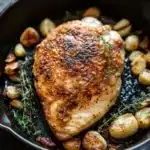
Pan-Seared Chicken Breast in Cast Iron Skillet
- Total Time: 25 minutes
- Yield: 2 1x
Description
A simple and delicious recipe for perfectly cooked, juicy chicken breasts seared in a cast iron skillet with a flavorful golden crust.
Ingredients
2 boneless, skinless chicken breasts (about 6 ounces each)
1 teaspoon kosher salt
1/2 teaspoon freshly ground black pepper
1 teaspoon garlic powder
2 tablespoons olive oil
2 tablespoons unsalted butter
2 cloves garlic, smashed
2 sprigs fresh thyme
Instructions
Pat the chicken breasts dry with paper towels to remove excess moisture.
Season both sides of each chicken breast evenly with kosher salt, black pepper, and garlic powder.
Heat the olive oil in a 10-inch cast iron skillet over medium-high heat until shimmering but not smoking, about 2 minutes.
Add the chicken breasts to the skillet and sear without moving for 5-6 minutes until the underside is golden brown and releases easily from the pan.
Flip the chicken breasts over and add the butter, smashed garlic cloves, and thyme sprigs to the skillet.
Tilt the skillet slightly and spoon the melted butter over the chicken breasts continuously for 4-5 minutes, or until the internal temperature reaches 165°F (74°C).
Remove the chicken breasts from the skillet and let them rest on a plate for 5 minutes before slicing and serving.
- Prep Time: 10 minutes
- Cook Time: 15 minutes
Explore more:
Dinner Recipes
Pan-Seared Chicken Breast in Cast Iron Skillet
Substitution Secrets
Sometimes, you’re staring down your pantry, and a couple of your key ingredients are MIA. Don’t sweat it. For instance, if you’re out of fresh thyme, dried thyme can stand in—use about a third of what fresh calls for since dried herbs pack a punch. No olive oil? Swap in avocado oil or grapeseed oil; their high smoke points keep the sear crisp and clean. Butter is crucial here for that basting magic, but if you’re dairy-averse, a splash of ghee or even coconut oil can do the trick—though expect a slightly different flavor profile. Garlic powder can be swapped for onion powder in a pinch, but it’s not quite the same; if you have fresh garlic but forgot the powder, mince it finely and add it earlier in the cooking to avoid burning. The key is maintaining that balance between flavor and cooking chemistry—these tweaks are like jazz riffs on a classic tune.
The Science
Let’s geek out for a sec. That golden crust? It’s Maillard reaction doing its dance—when amino acids and sugars in the chicken meat meet high heat, they bond and create those complex, savory flavors and the irresistible brown crust. Patting the chicken dry is non-negotiable here; water on the surface means steam, and steam kills the Maillard party. The cast iron skillet? It’s the unsung hero—its heat retention ensures even cooking and that killer crust. When you add butter and aromatics late in the cook, you’re basting—spooning hot, flavored fat over the chicken to keep it moist and add layers of flavor. Temperature control is key: too hot, and you burn the butter; too low, and you lose that crust. Pro tip: keep an instant-read thermometer handy to verify that perfect 165°F internal temp without the guesswork.
Real-world Fix
Here’s a little confession—I used to overcook chicken breasts to avoid the dreaded ‘rubbery rubber chicken’ syndrome. Rookie mistake. One day, I ditched the timer and focused on the feel and look—the chicken releases easily from the skillet when it’s ready to flip, and the crust should be a deep golden brown, not charred. When you add butter and herbs, spooning that mixture over the top is like giving the chicken a mini spa treatment, locking in juices and boosting flavor. Leftover chicken? Don’t just nuke it until it’s Sahara dry. I reheat gently in a skillet with a splash of broth or water, covering it briefly to steam it back to life. It’s these small hacks—the feel, the visual cues, and gentle reheating—that turn a simple recipe into a reliable weeknight winner.
Pan-Seared Chicken Breast FAQs
How do I know when the chicken is perfectly cooked without a thermometer?
If you don’t have a meat thermometer handy, the chicken should feel firm but not rock hard when you press it. Also, juices running clear is a classic tell. But honestly, investing in a thermometer is a game changer—no more guessing games.
Why is the butter added after flipping the chicken?
Adding butter after the flip lets it melt without burning and blends with the garlic and thyme, creating a rich basting sauce. It’s like giving your chicken a flavor hug while it finishes cooking.
Can I use any other herbs besides thyme?
Absolutely! Rosemary, oregano, or sage work just as well. Each herb brings a different vibe to the skillet, so feel free to play around depending on what’s in your herb garden or fridge.
What if my chicken sticks to the pan when searing?
Patience is key here. If the chicken sticks, it probably needs a tad more time to form that crust that naturally releases it. Also, make sure your pan is hot enough before adding the chicken—hot oil is your best friend.
Can I prepare this recipe for more than two people?
Sure can! Just scale up the ingredients and make sure your cast iron skillet is large enough to hold all the chicken breasts without crowding. Crowding means steaming, not searing—big no-no for crispy skin.