
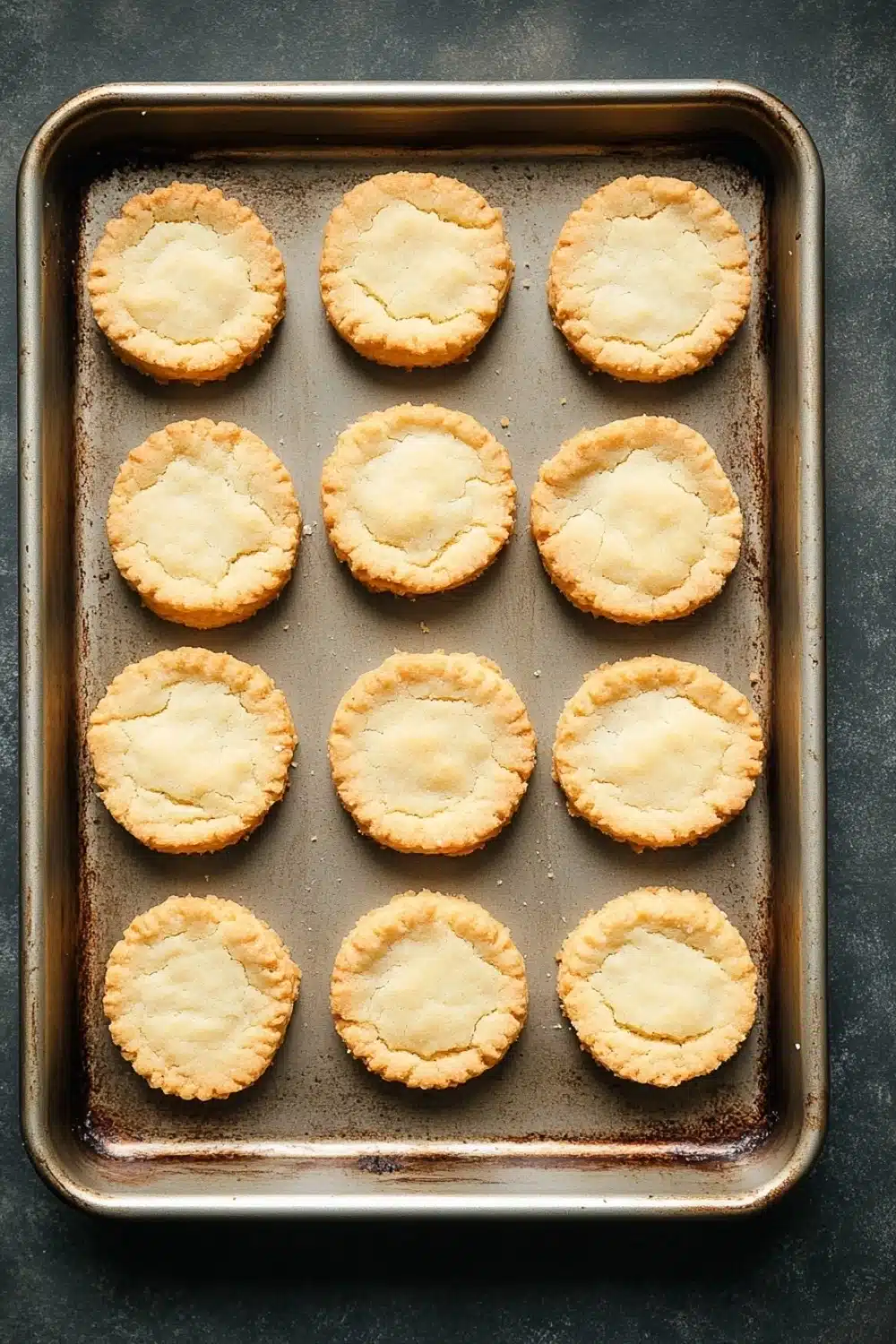
There’s something almost hypnotic about the way shortbread dough presses down into a sheet pan — the texture smooth, the scent of butter immediately warming the kitchen air. I remember the first time I baked this recipe; no fiddly scooping or rolling, just a simple press and score before sliding it into the oven. You can almost hear the gentle crackle of the edges as they bake, the golden hue creeping in slowly. This isn’t your typical cookie hustle, no sir. It’s an old-school, no-nonsense approach that delivers a tender, crumbly bite every time—right out of the pan, no fancy cutouts needed. The fork pricks aren’t just for show; they keep that shortbread from puffing like a soufflé gone rogue. And once cooled, slicing along those scored lines feels oddly satisfying—like a simple kitchen win. If you’ve ever wrestled with dough that fought back or cookies that crumbled too soon, this sheet pan method is your new jam. Crisp edges, that melt-in-the-mouth crumb, and just enough vanilla to keep things interesting. Trust me, it’s the kind of cookie that’s perfect with a late afternoon cuppa or a last-minute guest—no stress, all the flavor.
If you love the buttery crunch of a classic shortbread cookie sheet pan, wait until you try the perfect midday treat with a little more chew and a whole lot of flavor. Check out When a Peanut Butter Chocolate Oatmeal Cookie Hits Your Midday Craving Just Right for a cookie that’s just as satisfying but with an irresistible twist.
Why This Sheet Pan Shortbread Recipe Is a Game-Changer
- Batch baking made simple — no fussy scooping, just press, bake, and slice.
- Perfectly tender and crumbly texture that’s far from your average cookie.
- Butter and vanilla combo that hits just right without any extra fluff.
- Easy clean-up thanks to parchment paper—no scrubbing cookie cutters here.
- Great for sharing at parties or gifting, because who doesn’t love a box of homemade shortbread?
Shortbread Cookie Sheet Pan
Total Time: 40 minutes
Yield: 24 cookies 1x
Description
A classic buttery shortbread cookie baked in a sheet pan for easy slicing and sharing. These cookies have a tender, crumbly texture and a rich, buttery flavor perfect for any occasion.
Ingredients
Scale
2 cups (240 grams) all-purpose flour
1 cup (227 grams) unsalted butter, softened
1/2 cup (100 grams) granulated sugar
1/4 teaspoon salt
1 teaspoon vanilla extract
Instructions
Preheat the oven to 325°F (163°C).
Line a 9×13 inch (23×33 cm) sheet pan with parchment paper, leaving an overhang on the sides for easy removal.
In a large mixing bowl, cream the softened unsalted butter and granulated sugar together until light and fluffy, about 3-4 minutes using an electric mixer on medium speed.
Add the vanilla extract and mix until combined.
In a separate bowl, whisk together the all-purpose flour and salt.
Gradually add the flour mixture to the butter mixture, mixing on low speed until just combined and a dough forms.
Transfer the dough to the prepared sheet pan and press it evenly into the pan, smoothing the top with your hands or the back of a spatula.
Using a fork, prick the dough all over to prevent bubbling during baking.
Optional: Score the dough into 24 even squares using a knife to make cutting easier after baking.
Bake in the preheated oven for 25 minutes, or until the edges are lightly golden but the center is still pale.
Remove from the oven and allow the shortbread to cool completely in the pan on a wire rack.
Once cooled, lift the shortbread out of the pan using the parchment paper overhang and cut along the scored lines into 24 cookies.
Serve and enjoy or store as directed.
- Prep Time: 15 minutes
- Cook Time: 25 minutes
Explore more:
Buzz in the Kitchen Recipes
Shortbread Cookie Sheet Pan: Insider Tips and Tricks
Substitution Secrets
When I first dove into making sheet pan shortbread, I was thrown by the all-butter, all-flour simplicity. But life happens—maybe you’re out of butter or you want a twist. Unsalted butter is king here, but if you must, swap in European-style butter for a richer bite (it’s got more fat)—just watch your dough won’t spread as much. Margarine? Nah, it’s a no-go if you want that crumbly texture; it gums up the works. What about sugar? Granulated is standard, but I’ve played around with superfine sugar for a silkier, less grainy crumb. Brown sugar throws off the clean taste, but it’s cool for a twist if you’re chasing chewiness over crumbly. Flour? Stick to all-purpose—bread or cake flours can mess with the texture, making it too tough or too cakey. And vanilla? Pure extract is worth the splurge; artificial stuff leaves a chemical aftertaste that ruins the vibe.
The Science
Shortbread’s magic lies in its simplicity—fat, flour, sugar, and a pinch of salt. Butter’s fat coats the flour proteins, limiting gluten formation. Less gluten means tender, crumbly cookies instead of tough little bricks. Crème de la crème: creaming the butter and sugar incorporates air, giving the dough a bit of lift—skip this, and you end up with a dense, leaden slab. The fork pricks? Not just for show; they act like tiny steam vents, preventing the dough from puffing and cracking during baking. The low baking temp (325°F) ensures the butter melts slowly, preserving structure and flavor without browning too much. When the edges just turn golden and the center stays pale, that’s your sweet spot—overdo it, and you get a dry, burnt mess. Trust me, it’s a tightrope walk, but once you nail it, you’re golden.
Real-world Fix
So, your shortbread comes out looking like a cracked desert, or maybe it’s as hard as a hockey puck? Don’t toss it—there’s a fix. If cracks appear, it means the dough was too dry or pressed unevenly. Next time, press gently but firmly, ensuring even thickness and smooth surface. If it’s rock-solid, chances are you baked it too long or the oven runs hot—invest in an oven thermometer; it’s a game changer. Also, don’t skip cooling in the pan; it lets the butter firm up and the cookies set properly. To soften a hard batch, pop the cookies in a zip bag with a slice of bread overnight; the moisture will migrate and revive their tenderness. And hey, if your dough is too crumbly before baking, add a teaspoon of milk or cream—small tweaks make all the difference.
Shortbread Cookie Sheet Pan FAQs
Shortbread Cookie Sheet Pan FAQs
- Hey, can I use salted butter instead of unsalted?
- Yeah, you can—but watch your salt intake. Since this recipe already calls for a pinch of salt, using salted butter might throw off the balance a bit. If you go salted, skip or reduce the added salt to keep your cookies from tasting too salty.
- Do I really need to prick the dough with a fork? What’s that about?
- Absolutely. Fork-pricking prevents those annoying air bubbles from popping up during baking. It’s like giving your dough tiny escape hatches so it stays flat and bakes evenly. Trust me, skipping this step can turn your shortbread into a bumpy mess.
- Can I swap out the vanilla extract for something else?
- For sure. If you’re feeling adventurous, almond extract or even a hint of lemon zest can work wonders. Just be careful—not to overpower the buttery goodness. Vanilla plays the classic sidekick here, so any swap should be subtle.
- How do I keep my shortbread from crumbling too much?
- Shortbread’s crumbly nature is part of the gig, but you can tone it down by making sure your butter is properly softened (not melted) and by not overmixing the dough once you add the flour. Also, let the cookies cool fully before slicing—warm shortbread is fragile and prone to crumbling.
- Can I make these gluten-free?
- Yes, but it’s a bit of a juggling act. You’ll want a gluten-free flour blend that mimics all-purpose flour’s texture. Keep an eye on the dough’s consistency—it might need a tiny splash of milk or an extra egg yolk to hold together since gluten-free flours behave differently. Expect a slightly different crumb, but still tasty.