
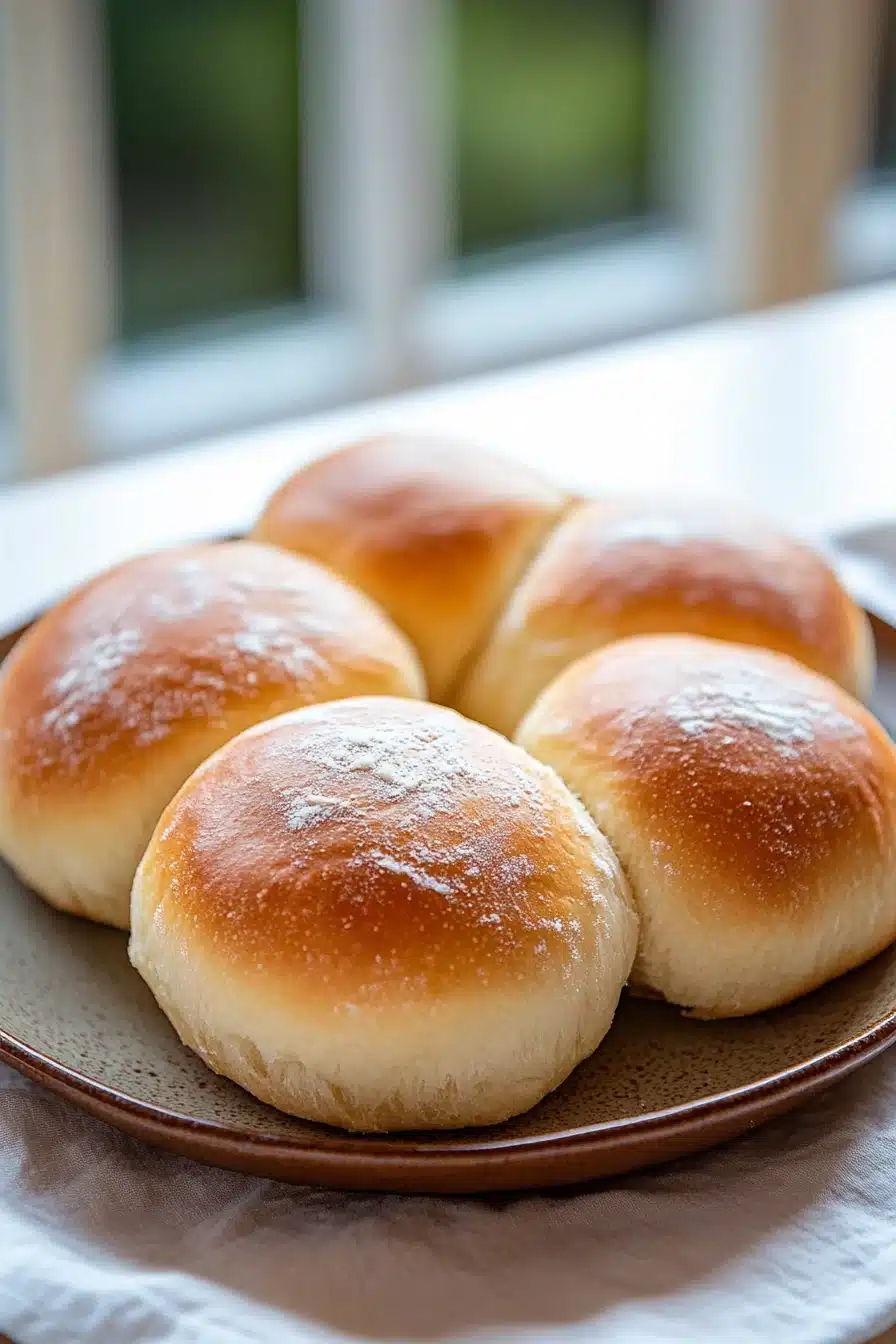
There’s something quietly satisfying about pulling fresh bread rolls from the oven when the kitchen smells like warm butter and a hint of sweetness. I remember one evening when I was halfway distracted by the phone buzzing in the other room and the kids clamoring for snacks. Somehow, these classic soft bread rolls still came out light and pillowy — a little uneven in shape, but perfectly soft inside. The kind of bread you can tear apart with your fingers, with just enough crust to hold a sandwich or soak up gravy without falling apart.
Why You’ll Love It:
- They rise beautifully without needing fancy equipment or odd ingredients.
- The texture is soft and tender, great for sandwiches or just slathered with butter.
- It’s simple — and that’s kind of the point. Nothing too complicated, just real homemade comfort.
- They don’t stay fresh forever, but that’s a good excuse to bake more.
If you’re a little nervous about working with yeast, don’t worry — this recipe is forgiving. Sometimes my dough was a bit stickier or took longer to rise, but the end result still felt like a warm hug after a long day.
Print
Classic Soft Bread Rolls
- Total Time: 1 hour 35 minutes
- Yield: 12 rolls 1x
Description
These classic soft bread rolls are fluffy, tender, and perfect for sandwiches or as a side to any meal. Made with simple ingredients, they are easy to prepare and bake at home.
Ingredients
4 cups (480 grams) all-purpose flour, plus extra for dusting
2 1/4 teaspoons (7 grams) active dry yeast
1 1/2 teaspoons salt
2 tablespoons (25 grams) granulated sugar
1 cup (240 ml) warm milk (about 110°F / 43°C)
1/2 cup (120 ml) warm water (about 110°F / 43°C)
3 tablespoons (42 grams) unsalted butter, melted
1 large egg
Instructions
In a small bowl, combine the warm water, warm milk, sugar, and active dry yeast. Stir gently and let it sit for 5 to 10 minutes until the mixture is foamy.
In a large mixing bowl, whisk together the flour and salt.
Make a well in the center of the flour mixture and pour in the yeast mixture, melted butter, and the egg.
Mix the ingredients together using a wooden spoon or your hands until a rough dough forms.
Turn the dough out onto a lightly floured surface and knead for about 8 to 10 minutes until the dough is smooth and elastic. Add small amounts of flour if the dough is too sticky.
Place the dough in a lightly greased bowl, cover it with a clean kitchen towel or plastic wrap, and let it rise in a warm place for about 1 hour or until it has doubled in size.
Once risen, punch down the dough to release the air. Turn it out onto a lightly floured surface and divide it into 12 equal pieces.
Shape each piece into a smooth ball and place them on a baking sheet lined with parchment paper, spacing them about 2 inches apart.
Cover the rolls loosely with a kitchen towel and let them rise again for 20 to 30 minutes until puffy.
Preheat the oven to 375°F (190°C).
Optional: Brush the tops of the rolls with a little milk or beaten egg for a shiny finish.
Bake the rolls in the preheated oven for 18 to 20 minutes or until they are golden brown on top.
Remove the rolls from the oven and transfer them to a wire rack to cool slightly before serving.
- Prep Time: 15 minutes
- Cook Time: 20 minutes
Kitchen Notes: This recipe doesn’t call for any special gadgets — just a bowl, your hands, and a warm spot for rising. I usually serve these soft rolls alongside a hearty stew or stuffed sandwiches. If you want to mix it up, you could try adding herbs to the dough or brushing with garlic butter after baking. I haven’t tested all these variations, but they sound promising. Also, if you’re short on time, you can freeze the rolls once cooled and toast them when needed.
FAQ:
Q: Can I use whole wheat flour instead?
A: You can, but expect a denser roll. Maybe mix with all-purpose flour for a softer texture.
Q: What if the dough is too sticky?
A: Add flour a little at a time during kneading. It’s supposed to be soft but manageable.
Q: Can I skip the second rise?
A: It’s better with both rises, but if you’re in a rush, you might get a less airy roll.
When the rolls come out golden and soft, there’s a quiet moment where everything feels a little more together. Give it a try, and see if they don’t become your go-to for simple, satisfying bread.