
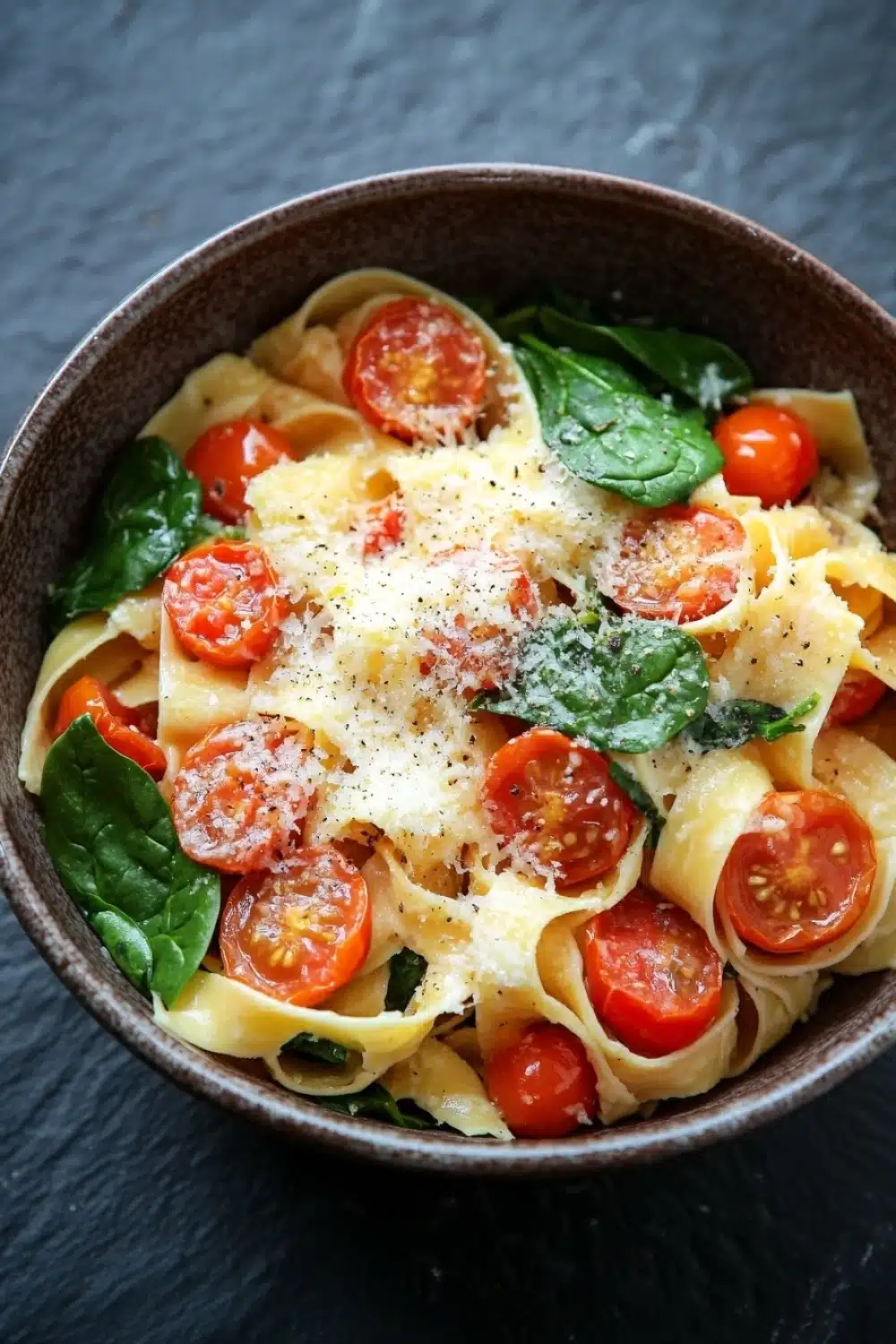
Less mess, more taste.
That’s the mantra I live by on hectic weeknights. Nothing beats the lazy genius of a one pot wonder, especially when it’s a silky tagliatelle soaking up rich tomato juices with garlic and greens. The kitchen smells like a rustic trattoria—not your average pasta night.
Picture this: a wide pot bubbling away on the stove, cherry tomatoes bursting open, releasing that sun-kissed sweetness. I always toss in a pinch of red pepper flakes for a sneaky kick, because why not shake things up? Watching fresh spinach wilt into the sauce feels like a little magic—simple ingredients doing heavy lifting with zero drama.
This pasta doesn’t just cook; it sings. Minimal cleanup, maximum flavor. Grab a fork and dive in—this one’s a keeper, trust me.
For a comforting meal that’s just as simple, check out our Slow Cooker Olive Garden Zuppa Toscana Soup Recipe Made Easy.
Why One Pot Tagliatelle Wins for Real Life Cooking
- Trash piles up less—only one pot means way less cleanup hassle after a busy day.
- Speed demon friendly: Ready in just 25 minutes, this recipe fits perfectly into a jam-packed schedule.
- Fresh flavors in every bite—cherry tomatoes and spinach keep it vibrant and far from boring.
- Minimal effort, max taste: toss everything in, stir, and walk away without babysitting your pasta like a hawk.
- Lunchbox upgrade: Leftovers reheat smoothly; just add a splash of broth to revive the saucy goodness.

One Pot Tagliatelle Pasta
- Total Time: 25 minutes
- Yield: 4 1x
Description
A quick and easy one pot tagliatelle pasta recipe cooked with fresh tomatoes, garlic, and spinach for a flavorful and comforting meal with minimal cleanup.
Ingredients
12 ounces dried tagliatelle pasta
4 cups vegetable broth
1 cup water
1 pint cherry tomatoes, halved
4 cloves garlic, thinly sliced
2 cups fresh spinach leaves
2 tablespoons olive oil
1 teaspoon salt
1/2 teaspoon black pepper
1/2 teaspoon dried oregano
1/4 teaspoon red pepper flakes
1/4 cup grated Parmesan cheese
Instructions
In a large deep skillet or wide pot, combine the tagliatelle pasta, vegetable broth, water, cherry tomatoes, garlic, olive oil, salt, black pepper, dried oregano, and red pepper flakes.
Bring the mixture to a boil over medium-high heat, stirring occasionally to prevent the pasta from sticking.
Once boiling, reduce the heat to medium and continue to cook, stirring frequently, until the pasta is al dente and most of the liquid has been absorbed, about 10 to 12 minutes.
Add the fresh spinach leaves to the pot and stir until wilted, about 1 to 2 minutes.
Remove the pot from heat and stir in the grated Parmesan cheese until well combined.
Serve immediately, garnished with additional Parmesan if desired.
- Prep Time: 10 minutes
- Cook Time: 15 minutes
Explore more:
Dinner Recipes
One Pot Tagliatelle Pasta Masterclass
The Ingredient Remix: Fresh Twists on a Classic
Sometimes, you gotta switch gears—because not every pantry is stocked like an Italian nonna’s. No tagliatelle? No sweat. Grab fettuccine, linguine, or even spaghetti. They all play nicely in this one-pot jam. Cherry tomatoes? Sure, they’re juicy bombs, but if you’re fresh out, toss in sun-dried tomatoes for a punchier vibe. Garlic lovers, don’t skimp; thin slices are your best bet to infuse that aroma without being overpowering. And spinach? It’s the MVP for quick wilting and that green pop. Want to sneak in some more veggie cred? Kale or Swiss chard makes a bold cameo. Just remember, the liquid ratio might tweak a bit—stay alert and stir like a boss.
Why This Technique Works—Less Fuss, More Flavor
Here’s the skinny: cooking pasta in broth and water with all your goodies in one pot is a game-changer. Instead of the usual double-duty—boiling pasta separately, draining, and then saucing—this method lets everything mingle from the get-go. That liquid carrying the pasta’s starch thickens as it simmers, locking in flavor and texture. It’s a bit like a risotto in disguise. Stirring frequently? Not just to keep your pasta from sticking but to coax out the best from those tomatoes and herbs. Plus, the spinach added near the end? It’s a quick wilt without turning into mush—perfectly timed so it stays vibrant. I’ve clocked this technique in after a long day—minimal cleanup, maximum return. It’s kitchen hustle without the headache.
Rescue Mission: Fixing Common One-Pot Pasta Flops
Ever ended up with a gluey mess or a watery soup when trying this style? Been there, done that, burned a T-shirt even. First, if your pasta is sticking like it’s auditioning for a horror role, it means you’re not stirring enough or your heat’s too high. Drop that heat and keep the paddle moving—like a DJ mixing a tight set. Next, if you see more liquid than pasta, you might’ve added too much water or your broth is too salty, causing you to add compensatory water. Fix? Drain a bit or crank up the heat to evaporate excess. And if the pasta’s undercooked but liquid’s gone? Add a splash more broth, cover, and let it steam for a minute or two. Parmesan’s your saving grace here—it pulls everything together, smoothing out texture issues, giving that comforting finish. Master these tweaks, and you’ll never fear the one-pot method again.
One Pot Tagliatelle Pasta FAQs
Can I use other pasta shapes?
Absolutely! While tagliatelle is ideal here for soaking up flavors, fettuccine or linguine can jump in without a hitch. Just mind the cooking time since thickness varies.
Is this recipe vegan-friendly?
No, because it calls for Parmesan cheese. But swapping Parmesan for a vegan cheese or nutritional yeast keeps it plant-based and just as tasty.
How do I prevent the pasta from sticking?
Great question! Stirring often during the boil is your best bet to keep strands from turning into a sticky mess. The oil also helps, but don’t skip the stir session.
Can I prepare this ahead of time?
Sure can, but it’s best eaten fresh. If you must save it, refrigerate leftovers in an airtight container and gently reheat with a splash of broth to bring it back to life — no one loves rubbery pasta.
What’s the trick to the sauce?
The magic is in the one-pot method where pasta cooks right in the broth and tomato juices. This technique melds flavors effortlessly, so no extra sauces needed.