
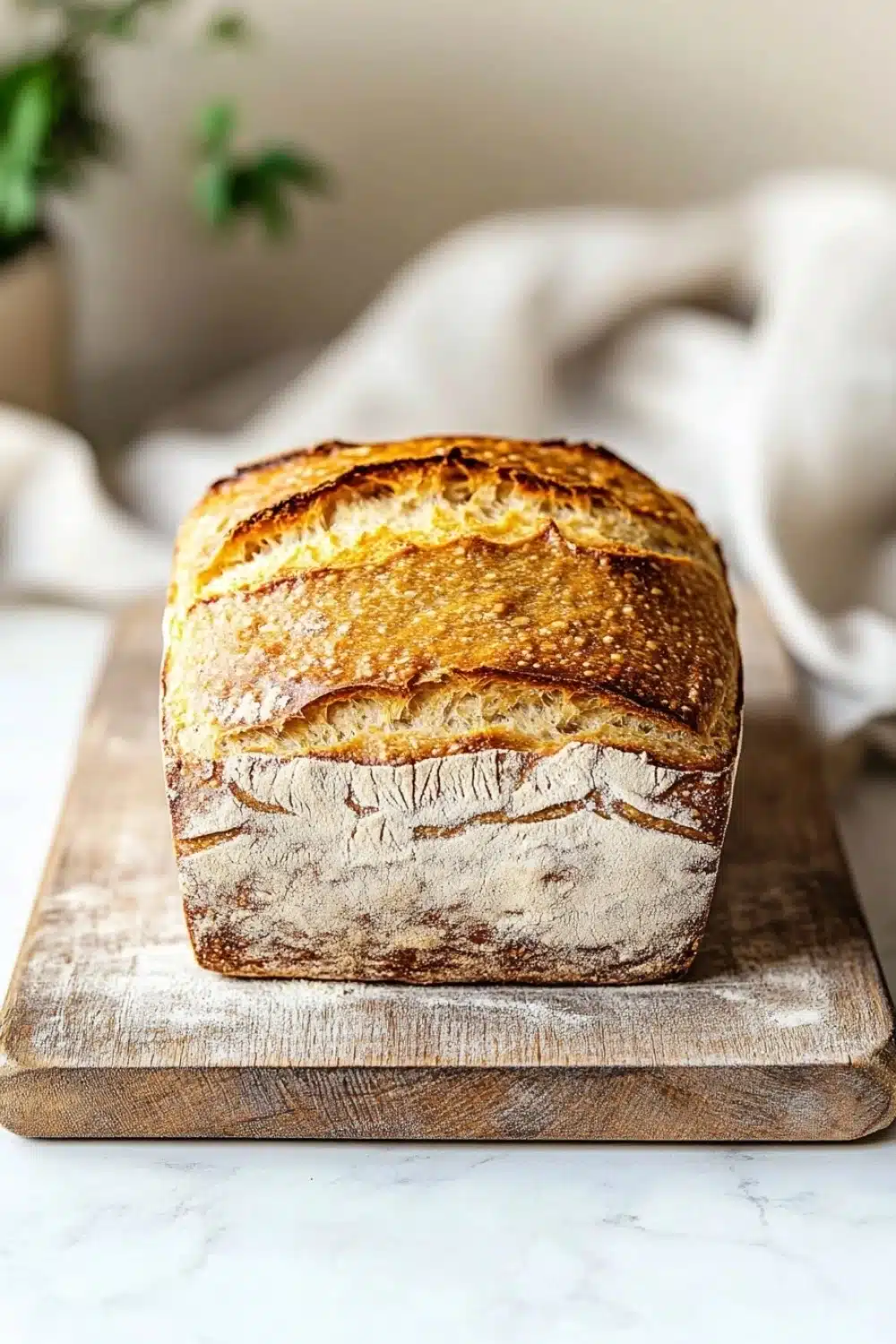
Low carb bread? Yes, please.
There’s something downright satisfying about a loaf that rises just right—soft on the inside, with a crust that’s gentle enough to hold a hearty sandwich but firm enough to soak up all the juicy goodness without turning to mush. I remember my first attempt at low carb yeast bread. It was a gamble. Almond flour and psyllium husk don’t behave like typical wheat flour; they have their own quirks. But when that dough finally puffed up in my warm kitchen corner, I knew I’d cracked the code.
Here’s the kicker—this bread actually bakes up light and pillowy, not dense or gummy like some keto breads can be. It’s got just the right bounce, thanks to the yeast doing its magic alongside the fibers in psyllium husk. No crumbly mess. Just slices that hold together, whether you’re making a classic turkey stack or a toasted avocado smash.
Get ready to toss out those sad, flavorless low carb bread slices. This one’s going to turn your sandwich game on its head.
If you’re looking for a comforting meal, be sure to try our Hearty Beef Casserole with a Golden Cornbread Crust Recipe to pair perfectly with your low carb yeast sandwich bread.
Why This Low Carb Yeast Sandwich Bread Works Wonders in Real Life
- Zero carb guilt—finally, a bread that fits your keto grind without sending your blood sugar on a rollercoaster.
- Soft, pillowy texture that doesn’t crumble like most almond flour breads—perfect for stacking your favorite sandwich fixings.
- Gluten-free and grain-free, so even your picky eaters or gluten-sensitive pals can chow down without drama.
- Psyllium husk gives it that legit bread-like chew and structure—none of that crumbly, sad loaf syndrome.
- It freezes like a champ—make a batch on Sunday, slice it up, and pull out exactly what you need all week long.
Low Carb Yeast Sandwich Bread
- Total Time: 1 hour
- Yield: 12 slices 1x
Description
A soft and fluffy low carb yeast sandwich bread perfect for sandwiches and toast, made with almond flour and psyllium husk for a healthy, gluten-free alternative.
Ingredients
2 1/2 cups almond flour
1/4 cup psyllium husk powder
1 tablespoon baking powder
1 teaspoon salt
1 packet (2 1/4 teaspoons) active dry yeast
1 tablespoon granulated erythritol
1 cup warm water (110°F / 43°C)
3 large eggs, room temperature
2 tablespoons olive oil
Instructions
In a small bowl, combine the warm water, active dry yeast, and granulated erythritol. Stir gently and let it sit for 5 to 10 minutes until the mixture becomes frothy.
In a large mixing bowl, whisk together the almond flour, psyllium husk powder, baking powder, and salt until well combined.
In a separate bowl, beat the eggs and olive oil together until smooth.
Add the frothy yeast mixture and the egg mixture to the dry ingredients. Stir with a spatula until a thick dough forms. The dough will be sticky and slightly thick.
Grease a 9×5 inch loaf pan with olive oil or line it with parchment paper.
Transfer the dough into the prepared loaf pan and smooth the top with a wet spatula or your hand.
Cover the loaf pan loosely with a clean kitchen towel and let the dough rise in a warm place for about 30 to 40 minutes, or until it has visibly puffed up.
Preheat the oven to 350°F (175°C).
Bake the bread for 40 to 45 minutes until the top is golden brown and a toothpick inserted in the center comes out clean.
Remove the bread from the oven and let it cool in the pan for 10 minutes.
Transfer the bread to a wire rack and allow it to cool completely before slicing to maintain its structure.
- Prep Time: 15 minutes
- Cook Time: 45 minutes
Explore more:
Lunch Recipes
Mastering Low Carb Yeast Sandwich Bread
The Psyllium Husk Trick: Why It’s Your Dough’s MVP
When I first tried baking low carb bread, the crumb was always a sad, crumbly mess—definitely bread’s version of a flop show. Enter psyllium husk powder, the unsung hero in gluten-free baking circles. It’s not just filler; it’s the glue that binds almond flour crumbs into a cohesive, elastic dough. Think of it as the bread’s secret weapon against the dreaded crumbly disaster. Psyllium swells when wet, creating a gel-like network that traps moisture and air pockets, mimicking the chewy texture you want without gluten’s help. Without it, your loaf might as well be a dense brick. I always say—if you’re going to low carb, don’t skip the psyllium husk unless you want to go full crouton mode.
The Yeast Dance: Timing and Temperature—No Shortcuts Allowed
Let’s talk yeast—the little live beasties that make your bread rise and give that subtle tang. You can’t just toss them into any liquid and expect magic. Yeast are picky: too hot, they die; too cold, they nap. 110°F (around 43°C) is their sweet spot. I remember once I got impatient and used lukewarm water straight from the tap—no froth, no rise, just a sad puddle. Don’t be like me. The froth is your green light—if it’s missing, your bread won’t puff up. And the rise? That’s the yeast flexing its muscles, creating air pockets that make the loaf light. Covering the dough loosely is crucial—too tight and the gas can’t escape, too loose and your dough dries out. It’s a delicate dance, but nail this and you’re halfway to sandwich greatness.
Fixing the Flop: When Your Loaf Refuses to Rise or Feels Too Dense
Here’s the deal—low carb bread isn’t always forgiving, but it’s worth the hustle. If your loaf turns out dense or flat, check these usual suspects:
- Yeast vitality: Old yeast? Dead yeast? Dead loaf. Always use fresh yeast and test with warm water plus a pinch of erythritol or sugar to get that frothy proof.
- Water temp: Too hot kills yeast; too cold stalls it. Use a thermometer or trust your wrist—it should feel warm, not scalding.
- Psyllium level: Too little psyllium means no structure; too much and the dough gets gummy. Stick to the recipe’s 1/4 cup psyllium husk powder—trust me.
- Rising environment: A drafty or cold kitchen will kill the yeast’s vibe. Find a cozy spot—like an oven with the light on or a warm corner.
Baking low carb bread is a bit like taming a wild pony—sometimes it’s stubborn, but with patience and the right moves, you’ll be slicing into soft, fluffy goodness that’s all yours.
Low Carb Yeast Sandwich Bread FAQs
Yes, you can! Instant yeast is a bit more potent and doesn’t need to be proofed, so just mix it directly with the dry ingredients and reduce the warm water slightly to keep the dough consistency right.
Psyllium husk acts like the glue that holds this low-carb bread together—it traps moisture and gives the loaf that chewy, fluffy texture you expect from sandwich bread. Without it, you’re looking at a crumbly mess. Trust me, I’ve been there.
Nope. The erythritol feeds the yeast, helping it to activate and rise properly. If you leave it out, your bread might come out dense and flat, and nobody wants a brick sandwich. A tiny bit of sugar substitute is the yeast’s fuel, after all.
Best eaten within three days when stored at room temp in an airtight container. Beyond that, it’s freezer time—wrapped tight, it’ll chill in there for up to a month. When you’re ready, thaw it back out to avoid tough slices.
Absolutely. Let it cool completely on a wire rack before slicing—cutting it warm is like trying to slice fresh mozzarella with a butter knife: messy and frustrating. Use a serrated bread knife and go slow; this bread is soft, and you want those perfect sandwich slices.