
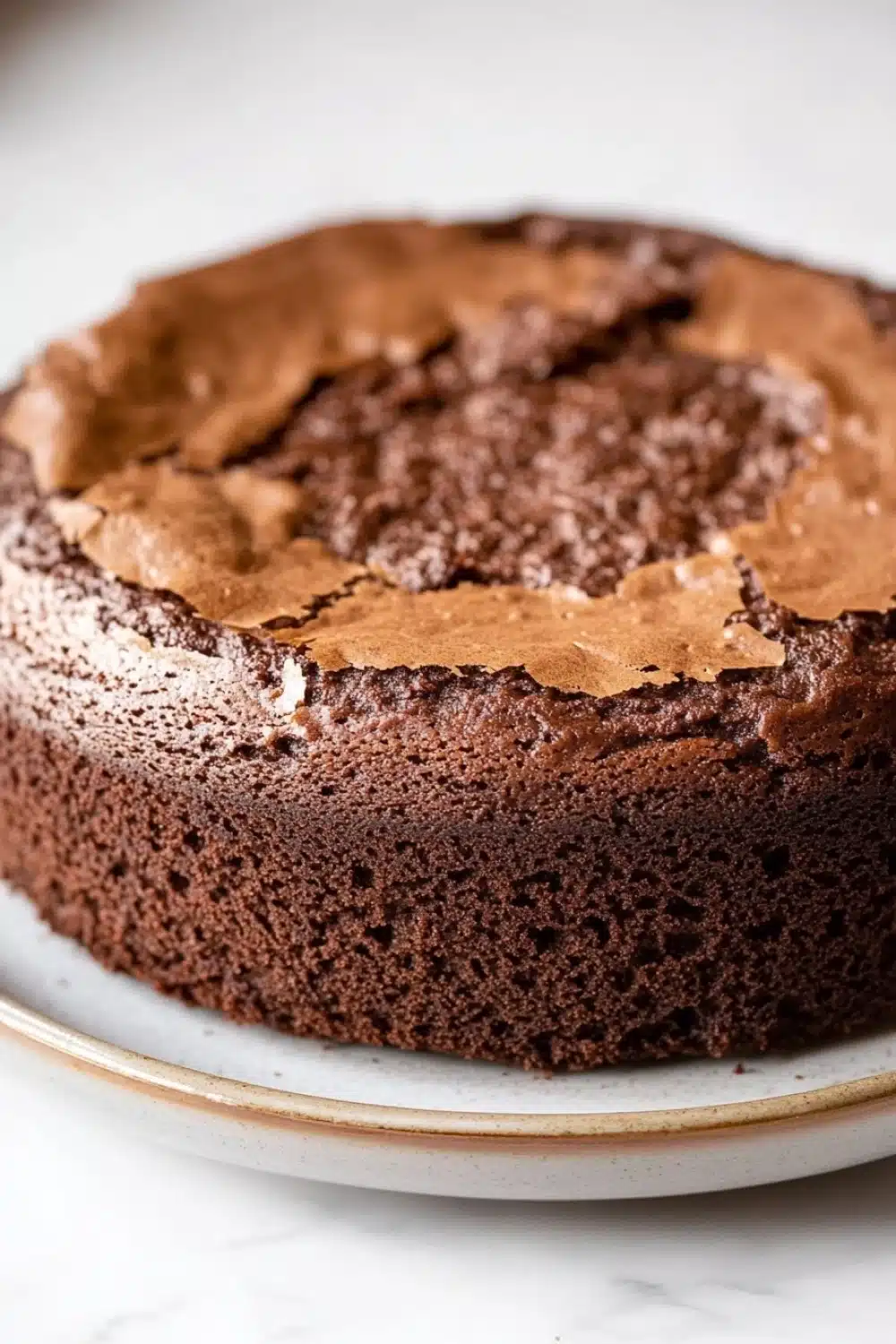
Forget the frosting.
There’s a quiet charm in a chocolate cake that doesn’t lean on icing—just pure, unmasked cocoa goodness. I remember the first time I tried baking one without the sugary topcoat; skeptics in my crew raised eyebrows, yet the first bite silenced the room. The crumb was tender, moist, with just enough density to feel like a proper chocolate hit—no fluff, all heart.
Mixing the batter is a bit of a dance. The dry ingredients come together like old friends—flour, cocoa powder, sugar—then eggs, milk, and vanilla join the party. Stirring in boiling water? That’s the secret to making it unbelievably moist without a hint of dryness. It’s like the cake’s quietly soaking in a rich cocoa bath before it hits the oven.
This cake is a low-key hero. No need to fuss over icing or ganache—sometimes, simplicity is the real showstopper, and this cake proves it every time.
If you’re looking for a delicious alternative to chocolate cake no icing, try this Classic Banana Cake Recipe: Moist, Creamy, and Irresistibly Easy for a flavorful treat.
Real-Life Benefits of This Classic Chocolate Cake
- Quick prep—ready to bake in just 15 minutes, perfect for those last-minute dessert cravings.
- Moist and tender crumb without any fancy frosting—ideal for folks who prefer their chocolate cake straight-up, no sugar overload.
- Uses simple pantry staples; no need to hunt down obscure ingredients when the craving hits.
- Thin batter trick with boiling water keeps the cake super moist, making it a go-to for novice bakers who want foolproof results.
- Great for making ahead—store at room temp for a few days or freeze slices for a sweet bite whenever the mood strikes.
Classic Chocolate Cake Without Icing
- Total Time: 50 minutes
- Yield: 8 1x
Description
A rich and moist chocolate cake that is perfect on its own without any icing. This simple yet delicious cake highlights deep chocolate flavor with a tender crumb, ideal for those who prefer a less sweet dessert.
Ingredients
1 and 3/4 cups (220 grams) all-purpose flour
3/4 cup (65 grams) unsweetened cocoa powder
2 cups (400 grams) granulated sugar
1 and 1/2 teaspoons baking powder
1 and 1/2 teaspoons baking soda
1 teaspoon salt
2 large eggs
1 cup (240 ml) whole milk
1/2 cup (120 ml) vegetable oil
2 teaspoons pure vanilla extract
1 cup (240 ml) boiling water
Instructions
Preheat your oven to 350°F (175°C). Grease and flour a 9-inch (23 cm) round cake pan.
In a large mixing bowl, sift together the all-purpose flour, unsweetened cocoa powder, granulated sugar, baking powder, baking soda, and salt.
Add the eggs, whole milk, vegetable oil, and vanilla extract to the dry ingredients. Beat on medium speed for 2 minutes until the batter is smooth and well combined.
Carefully stir in the boiling water. The batter will be thin, but this is normal and ensures a moist cake.
Pour the batter evenly into the prepared cake pan.
Bake in the preheated oven for 30 to 35 minutes or until a toothpick inserted into the center comes out clean.
Remove the cake from the oven and allow it to cool in the pan for 10 minutes.
Turn the cake out onto a wire rack and let it cool completely before serving.
- Prep Time: 15 minutes
- Cook Time: 35 minutes
Explore more:
Buzz in the Kitchen Recipes
Classic Chocolate Cake Without Icing: Master the Basics and Beyond
The Magic of Ingredient Swaps: More than Just Flour and Cocoa
Let’s talk flour first. While the recipe calls for all-purpose flour, I’ve often swapped in cake flour when aiming for that extra tender crumb—think clouds with a hint of chocolate. Cake flour’s lower protein content means less gluten development, which keeps the texture soft without falling apart. Just remember to reduce it by about 2 tablespoons per cup if you’re making the swap, or your cake might turn into a dense beast.
Then there’s the cocoa powder. Unsweetened is the classic go-to here, but I’ve played around with Dutch-processed cocoa to boost depth—the difference is subtle but real. Dutch cocoa is less acidic, so it won’t react quite the same way with your baking soda. If you make this swap, reduce the baking soda slightly or add a touch of baking powder to keep your rise on point.
And liquid fats? Vegetable oil is the stealthy hero behind this cake’s moisture. I sometimes reach for melted coconut oil to add a whisper of nuttiness. But heads up—coconut oil solidifies at cooler temps, which can mess with your batter’s flow, so keep it melted and warm before mixing. Don’t be shy about experimenting; this cake’s forgiving enough to take a few creative detours.
Why That Boiling Water Trick Is a Game-Changer
Here’s where the recipe pulls a neat trick—the boiling water. At first glance, it feels counterintuitive tossing hot liquid into batter that’s already mixed. But this move actually unlocks the full potential of the cocoa powder, hydrating it fully and intensifying the chocolate flavor in a way that cold liquid simply can’t.
More than that, the hot water thins out the batter drastically, which might freak you out if you’re expecting thick dollops of batter. Embrace the thinness—it ensures the cake stays incredibly moist and light, preventing that dry “dusty” crumb that’s the bane of many chocolate cakes. This is the kind of cake where you don’t want to play it safe; the thin batter is absolutely on purpose.
Quick tip: Stir the boiling water in gently—no need for vigorous mixing because you don’t want to overwork the gluten, or you’ll end up with a tough bite instead of a tender crumb.
Fixing Common Fails: When Your Cake Doesn’t Cooperate
Ever sliced into a chocolate cake expecting moist magic only to find a dry, crumbly mess? Been there. This cake is pretty forgiving, but a few pitfalls can still trip you up.
First, baking time is king. Pull it out too soon, and you’re stuck with a gooey undercooked center; too late, and it’s Sahara-level dry. I always recommend starting to check at 30 minutes with a toothpick, poking in several spots—not just the center—because ovens play dirty tricks with uneven heat.
Secondly, don’t skimp on greasing and flouring the pan. That crust might not look like much, but it’s your cake’s best friend when it comes to clean removal. If your cake sticks and breaks apart, next time use parchment on the bottom and grease the sides to avoid a tragic cake crumble.
Lastly, patience is a virtue. This cake needs to cool completely before slicing. Cutting into it warm is a rookie move; you’ll be hacking through a fragile, delicate structure and losing that perfect crumb. Wait it out—your knife (and your taste buds) will thank you.
Your Chocolate Cake Questions Answered
Yes, this recipe already uses unsweetened cocoa powder, so no baking chocolate needed. It’s simpler and keeps the deep chocolate kick intact.
Not a chance. The boiling water thins the batter, which keeps it moist and tender inside. I’ve seen dry chocolate cake—and this ain’t it.
You can, but expect a denser crumb and slightly different texture. Butter solidifies when cooled, so the cake won’t be as soft as with oil. If you’re chasing that fudgy mouthfeel, stick with oil.
Standard toothpick test works wonders here. Insert it into the center—if it comes out clean or with a few moist crumbs, it’s good to go. Don’t overbake or you’ll end up with a chalky bite—no bueno.
Short answer: No, not without tweaking. Eggs and milk are key players here for structure and moisture. You could try flax eggs and plant-based milk, but results will vary and require some trial and error.