
Let’s talk comfort food.
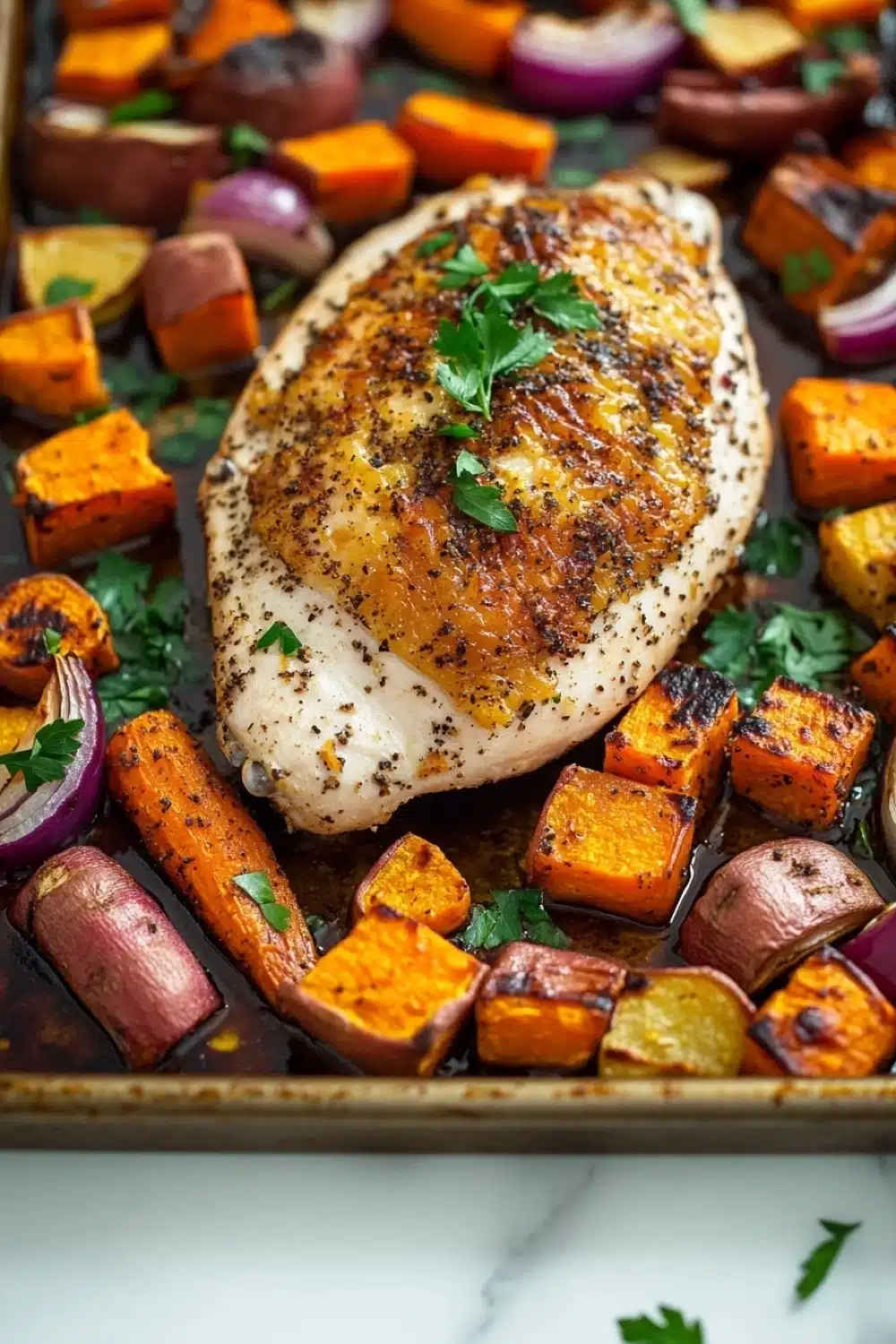
That aroma—rosemary mingling with garlic and sweet caramelized edges of root veggies—takes over the kitchen like a warm hug on a chilly evening. I swear, nothing says ‘home’ quite like a sheet pan loaded with golden roasted chicken breast nestled among tender carrots, parsnips, and sweet potatoes.
Every time I slide this dish into the oven, it’s like the countdown to cozy begins. The secret? Patience and a good dose of olive oil slathered all over. It’s the kind of meal that makes you ditch the takeout menus and get your hands dirty in the kitchen without a second thought.
Simple, honest, and hearty. No fuss, just real food that sticks to your ribs.
For a delicious complement to your roasted chicken breast and root vegetables, try this beef chicken gravy recipe that adds a rich, savory touch to your dinner favorites.
Why This Roasted Chicken and Root Veggie Combo Works Wonders in Real Life
- Hands-off dinner: Toss everything on one pan and let the oven do the heavy lifting—perfect for busy weeknights when you want to eat well but can’t babysit the stove.
- Meal-prep magic: Makes 4 servings, so you can easily pack leftovers for work lunches or a quick reheat on lazy evenings without losing flavor or texture.
- Comfort food without the guilt: Lean chicken breast paired with nutrient-dense root vegetables hits the spot without leaving you weighed down or dragging the next day.
- Seasoned like a pro: The thyme and rosemary add just enough woodsy punch, turning a simple roast into a plate that whispers ‘home-cooked’ without trying too hard.
- Zero fancy gear needed: Just a baking sheet and a bowl—no sous vide or fancy gadgets—making this recipe a no-brainer for rookie cooks and seasoned pros alike.

Roasted Chicken Breast and Root Vegetables
- Total Time: 55 minutes
- Yield: 4 1x
Description
A simple and flavorful roasted chicken breast served with a medley of tender root vegetables, perfect for a wholesome and comforting meal.
Ingredients
4 boneless skinless chicken breasts (about 6 ounces each)
2 tablespoons olive oil, divided
1 teaspoon kosher salt, divided
1/2 teaspoon freshly ground black pepper, divided
1 teaspoon dried thyme
1 teaspoon dried rosemary
3 medium carrots, peeled and cut into 1-inch pieces
2 medium parsnips, peeled and cut into 1-inch pieces
1 medium sweet potato, peeled and cut into 1-inch cubes
1 medium red onion, peeled and cut into wedges
3 cloves garlic, minced
1 tablespoon fresh parsley, chopped (for garnish)
Instructions
Preheat the oven to 425°F (220°C).
In a large bowl, combine the carrots, parsnips, sweet potato, red onion, and minced garlic.
Drizzle 1 tablespoon of olive oil over the vegetables, sprinkle with 1/2 teaspoon kosher salt and 1/4 teaspoon black pepper, then toss to coat evenly.
Spread the vegetables in a single layer on a large rimmed baking sheet.
In the same bowl, rub the chicken breasts with the remaining 1 tablespoon olive oil, 1/2 teaspoon kosher salt, 1/4 teaspoon black pepper, dried thyme, and dried rosemary until evenly coated.
Place the seasoned chicken breasts on top of the vegetables on the baking sheet.
Roast in the preheated oven for 35 to 40 minutes, or until the chicken reaches an internal temperature of 165°F (74°C) and the vegetables are tender and caramelized around the edges.
Remove from the oven and let the chicken rest for 5 minutes before slicing.
Transfer the chicken and roasted vegetables to serving plates.
Garnish with chopped fresh parsley and serve warm.
- Prep Time: 15 minutes
- Cook Time: 40 minutes
Explore more:
Dinner Recipes
Mastering Roasted Chicken Breast and Root Vegetables
The Art of Ingredient Swaps—When and Why to Bend the Rules
Listen, not everyone has parsnips or sweet potatoes lounging in the crisper. Swap them out for turnips or rutabaga—both pack a similar starchy punch and roast up just as nicely. Don’t overlook the humble potato either; Yukon Golds can add a creamy texture that melts in your mouth. If rosemary isn’t your jam, sage or oregano can take the stage without throwing off the whole vibe. And olive oil? Sure, it’s the classic, but avocado oil or even melted butter add their own swagger to the roast. I once subbed coconut oil for a tropical twist—crazy, but surprisingly tasty. The key is balancing flavors and textures, not slavishly following the script.
Why That 425°F Roasting Temp Is Non-Negotiable
Roasting at 425°F isn’t just chef jargon—it’s the number that makes magic happen. At this heat, the outside of the chicken and veggies caramelize, forming those crave-worthy crispy edges, while the inside stays juicy and tender. Too low, and you end up with sad, pale food; too high, and you risk a burnt crust with raw interiors. Here’s the kicker—the chicken breast is lean, so it dries out quickly if you drag the roast. High heat for a shorter time is your golden ticket. Remember, letting the chicken rest post-roast allows juices to redistribute—skip this, and you’re slicing into a desert. Roasting veggies alongside means they absorb the chicken’s savory drippings, creating a beautiful, cohesive plate with minimal fuss.
Fixing the Usual Suspects: Dry Chicken and Soggy Veggies
Dry chicken is the bane of many kitchens. The culprit? Overcooking or skipping the rest period. Invest in a cheap instant-read thermometer—aim for 165°F internal temp, no more. Pull it out a tad early if you want borderline perfection; carryover heat will finish the job. Soggy veggies? They’re often crowded on the pan or coated too heavily with oil. Give them space; roasting is a dry heat game—crowding causes steam, which kills crispiness. Tossing veggies with just enough oil to coat them like a light jacket lets them roast properly. Also, cut veggies uniformly so they cook evenly. And for garlic lovers—roast whole cloves with skin on if you want mellow sweetness instead of bitter char.
Roasted Chicken Breast and Root Vegetables FAQ
Yes, you can! Just increase the roasting time by about 10-15 minutes to ensure the chicken cooks through. Always check for an internal temp of 165°F to be safe.
Absolutely not! While the recipe suggests peeling, I sometimes leave the skin on carrots or sweet potatoes for extra texture and nutrients. Just give ’em a good scrub to remove dirt—that’s the beauty of root veg with character.
Quick answer: No. The roasted veggies tend to turn mushy after freezing and reheating, and chicken breast can dry out. Better to enjoy this fresh or store in the fridge for a couple of days.
For sure. If you use fresh thyme and rosemary instead of dried, triple the amount since dried herbs pack more punch. Add fresh herbs toward the end of roasting or as a garnish to keep their bright flavor intact.
The secret is space and heat—spread those root chunks out in a single layer so they’re not crowded, use a hot oven (425°F), and toss with a good drizzle of olive oil. Halfway through cooking, give the pan a shake or flip the veggies to brown all sides evenly.