
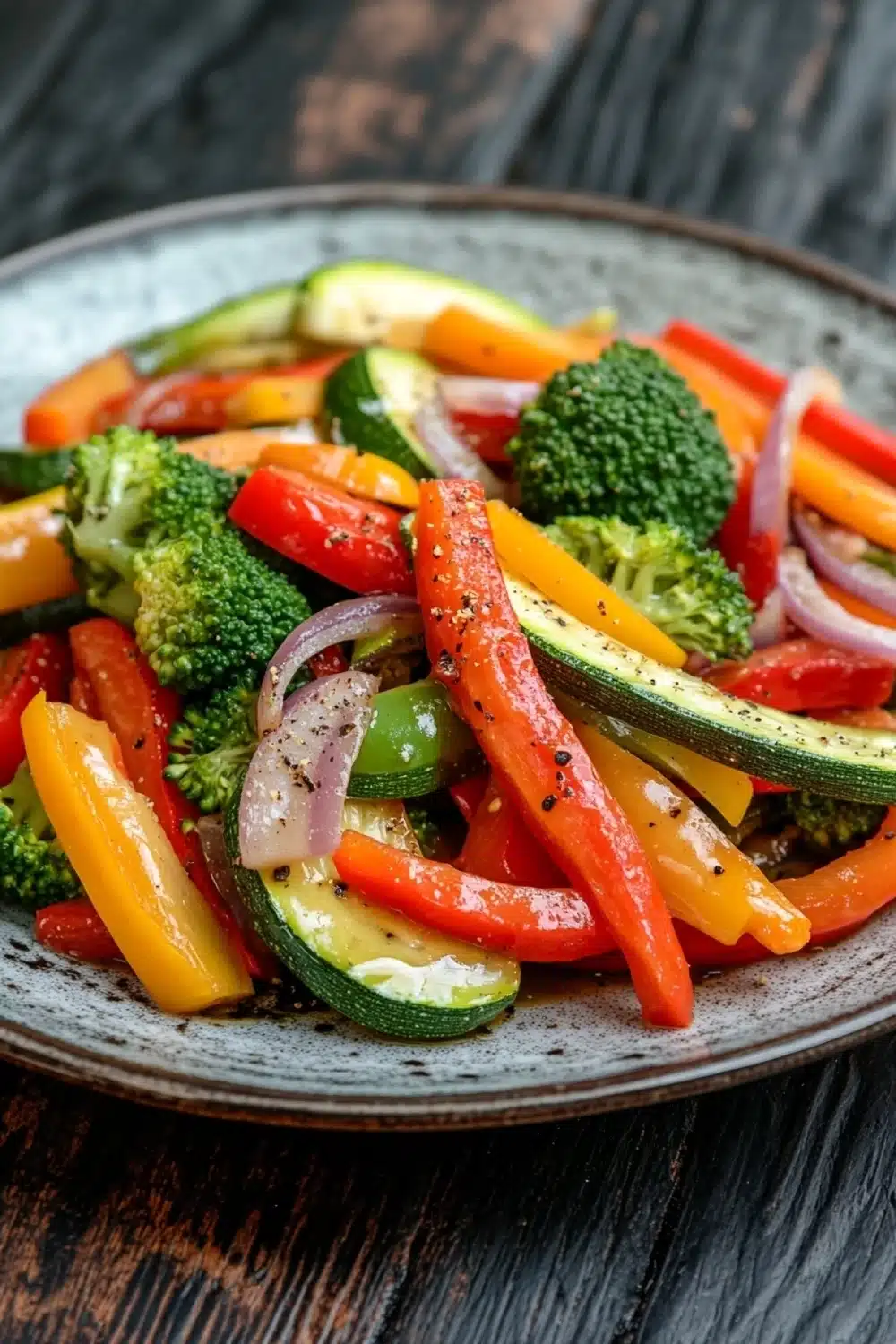
Kitchen magic in motion.
There’s something deeply satisfying about the sizzle of vegetables hitting a hot skillet—each chop and stir a small ritual that sets the stage for a simple, vibrant dish. I remember the first time I tossed a mess of colorful peppers, zucchini, and broccoli into a pan, then drenched them in a tangy, glossy sauce. The aroma alone had me hooked, like a siren call to the table.
Sautéed vegetables in sauce aren’t just a side hustle—they’re the main act when done right. It’s about hitting that sweet spot where the veggies remain tender-crisp, the sauce clings like a second skin, and every bite snaps with freshness. This recipe? It’s like a reliable kitchen hack, turning humble produce into a plate that’s anything but boring.
So, if you’re ready to ditch limp, flavorless veg and bring some umami-packed punch to your weeknight line-up, this method will have you cooking like a pro in no time.
For a simple and delicious meal, try our Quick Shrimp Sheet Pan with Asparagus for Effortless Dinner which pairs perfectly with sauteed vegetables in sauce.
Real-Life Wins with Sautéed Vegetables in Savory Sauce
- Quick whip-up for those hectic weeknights when you want something healthy but can’t mess around with long cook times.
- The vibrant colors and crisp-tender texture make it a crowd-pleaser even for picky eaters—veggies don’t have to be boring.
- Flexible as heck: serve it solo for a light lunch or as a sidekick to your favorite protein—versatility is the name of the game.
- Leftovers hold up like champs—perfect for packing into lunchboxes or reheating without turning into a soggy mess.
- And hey, getting a heap of veggies in one go means you’re crushing those daily greens goals without breaking a sweat.
Sautéed Vegetables in Savory Sauce
- Total Time: 30 minutes
- Yield: 4 1x
Description
A vibrant and healthy dish featuring a medley of sautéed vegetables cooked to perfection and coated in a flavorful savory sauce. Perfect as a side dish or a light main course.
Ingredients
2 tablespoons olive oil
1 medium red bell pepper, sliced into thin strips
1 medium yellow bell pepper, sliced into thin strips
1 medium zucchini, sliced into half-moons
1 medium carrot, peeled and sliced thinly
1 cup broccoli florets
1/2 medium red onion, thinly sliced
2 cloves garlic, minced
1/2 cup low-sodium vegetable broth
2 tablespoons soy sauce
1 tablespoon tomato paste
1 teaspoon honey
1/2 teaspoon ground black pepper
1/4 teaspoon salt
1 teaspoon cornstarch
1 tablespoon cold water
1 tablespoon chopped fresh parsley
Instructions
In a small bowl, whisk together the vegetable broth, soy sauce, tomato paste, honey, black pepper, and salt until smooth. Set aside.
In a separate small bowl, mix the cornstarch and cold water to create a slurry. Set aside.
Heat the olive oil in a large skillet over medium-high heat.
Add the minced garlic and sliced red onion to the skillet and sauté for 2 minutes until fragrant and slightly softened.
Add the sliced red bell pepper, yellow bell pepper, zucchini, carrot, and broccoli florets to the skillet. Stir frequently and cook for 6 to 8 minutes until the vegetables are tender-crisp.
Pour the prepared sauce mixture over the vegetables and stir to combine.
Slowly add the cornstarch slurry to the skillet while stirring continuously to thicken the sauce.
Cook for an additional 2 to 3 minutes until the sauce has thickened and coats the vegetables evenly.
Remove from heat and sprinkle with chopped fresh parsley before serving.
- Prep Time: 15 minutes
- Cook Time: 15 minutes
Explore more:
Dinner Recipes
Mastering Sautéed Vegetables in Savory Sauce
The Quick Swap Hack: When Ingredients Play Hard to Get
Sometimes your fridge doesn’t exactly match the recipe’s dream team. No zucchini? No sweat. Try swapping in eggplant or asparagus for a similar texture kick. Bell peppers can be swapped with sweet mini peppers or even some mild chili for a punch. Broccoli florets out? Cauliflower’s your crash pad. The key is keeping the crunchy-tender vibe alive—no one wants mush city here. I’ve often pulled this move on busy weeknights when inspiration meets what’s actually on hand. Remember, the sauce is the boss here, so keep those umami notes strong with soy sauce and tomato paste to carry the day.
Why This Technique Makes Your Veggies Sing
Heat management is everything. You start with medium-high heat to get that quick sizzle—the veggies need to snap and pop, not steam into oblivion. Tossing in garlic and onions first sets a flavor base that’s anything but shy. Then, vegetables hit the pan in a staggered fashion—dense ones like carrots and broccoli first, softer ones later—to keep texture contrast on point.
The sauce? It’s a layered story: vegetable broth adds body, soy sauce ups the savory ante, tomato paste brings deep, tangy notes, and honey balances with a hint of sweetness. The cornstarch slurry works like magic, thickening the sauce just right so it clings like a second skin rather than a watery mess.
When Things Go Sideways: Fixing Common Sauté Fails
—Mushy veggies? Usually means the heat dropped too low or you piled the pan too high, causing steam instead of sizzle. Next time, give your skillet some space to breathe. Cook in batches if you must.
—Sauce too runny? Your slurry might be off or added all at once. Patience, soldier! Drizzle it in gradually while stirring—thickness takes time.
—Bitterness from garlic? Burnt garlic turns bitter fast. Toss it in when your oil’s hot but not smoking and keep it moving.
—Flavor flatline? Missing that punch? A splash of acidity—lemon juice or a dash of vinegar—can turn the dullest sauce around.
In my kitchen, I always keep an eye on the pan like a hawk—this isn’t a set-it-and-forget-it deal. The difference between a good sauté and a so-so one? Attention to heat and timing, my friend.
Sautéed Vegetables in Savory Sauce: FAQ
- Can I use frozen veggies?
- Yes, you can! Just thaw them first and drain any excess water to avoid sogginess—freshness counts but frozen is a solid backup when the pantry’s bare.
- Is this dish vegan?
- Absolutely. Everything here is plant-based, making it perfect for vegans or anyone looking to keep things light and green. The honey can be swapped for maple syrup if you’re strictly vegan.
- Can I make this ahead of time?
- Definitely, but here’s the scoop: veggies are best fresh for that crisp-tender bite. If you prep and store, reheat gently to keep the texture intact. Overcooking during reheat turns them into mush city.
- What’s the best way to thicken the sauce?
- That cornstarch slurry is your best friend. Mix it with cold water before adding it slowly to the pan—this trick keeps it lump-free and silky without turning into glue.
- Is it okay to swap olive oil for another oil?
- Sure thing! Just pick a neutral oil like canola or avocado to keep the flavors balanced. Using something with a strong flavor, like coconut oil, will change the vibe of the dish quite a bit.