
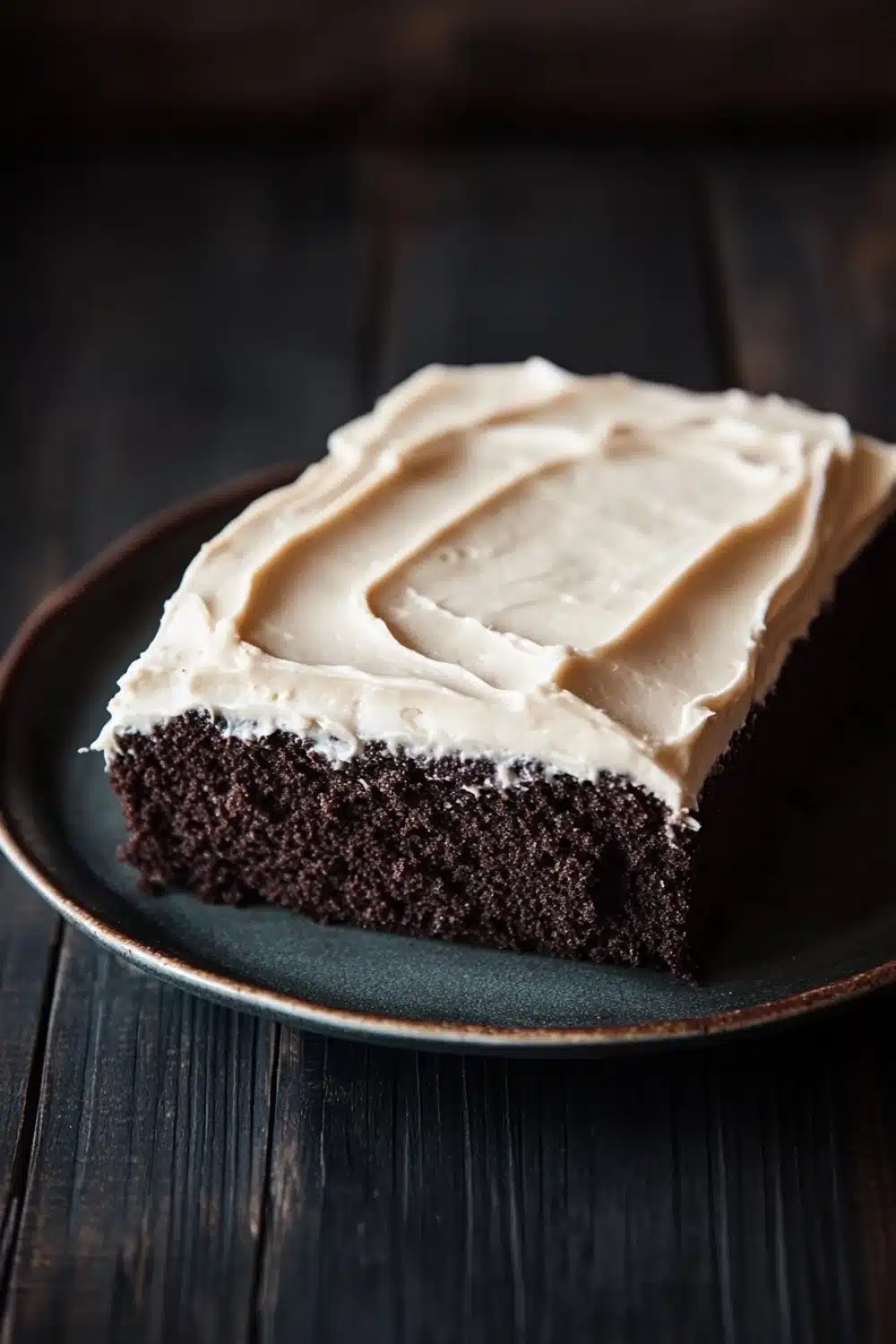
Nothing beats a sheet cake moment.
There’s a certain magic in the kitchen when that rich cocoa scent starts to fill the air—thick, warm, and promising. I remember pulling this very recipe from a dog-eared cookbook, beating the batter while the afternoon sun dipped low. Every stir felt like coaxing comfort into the mix, a little love folded between the flour and sugar.
And then comes the cream cheese frosting, that tangy, smooth crown that turns an ordinary cake into something you’ll want to sneak bites of before anyone’s watching. It’s that silky spread on top—like a velvet blanket wrapping a chocolate hug. I’ve seen plenty of cakes, but this pairing? It’s the real deal—no fluff, just pure, honest indulgence.
Whip it up, slice it thick, and watch smiles grow. This isn’t just dessert; it’s a full-on mood.
If you’re looking for a delightful sheet cake with cream cheese frosting, this recipe is a must-try for any occasion.
Why This Classic Sheet Cake Wins Hearts Every Time
- Whip it up in under an hour—because who has all day? Perfect for last-minute get-togethers or an impromptu craving.
- The buttermilk and hot water combo makes the cake ultra-moist, not just your run-of-the-mill dry crumb. Seriously, it’s like biting into a chocolate cloud.
- Cream cheese frosting adds that tangy punch that cuts through sweetness—no one wants to be swimming in sugar town.
- This sheet cake feeds a crowd without requiring gourmet skills or fancy tools—just a trusty 9×13 pan and a mixer.
- Leftovers? Covered and chilled, it keeps its magic for days. Bring it out, let it breathe at room temp, and it’s almost like fresh-baked all over again.
Classic Sheet Cake with Cream Cheese Frosting
- Total Time: 50 minutes
- Yield: 12 1x
Description
A moist and tender chocolate sheet cake topped with a rich and tangy cream cheese frosting, perfect for any celebration or casual gathering.
Ingredients
2 cups all-purpose flour
2 cups granulated sugar
3/4 cup unsweetened cocoa powder
2 teaspoons baking soda
1 teaspoon baking powder
1/2 teaspoon salt
1 cup buttermilk, room temperature
1/2 cup vegetable oil
2 large eggs, room temperature
1 teaspoon pure vanilla extract
1 cup hot water
8 ounces cream cheese, softened
1/2 cup unsalted butter, softened
4 cups powdered sugar
1 teaspoon pure vanilla extract
Instructions
Preheat the oven to 350°F (175°C). Grease and flour a 9×13-inch sheet pan.
In a large mixing bowl, sift together the flour, granulated sugar, cocoa powder, baking soda, baking powder, and salt.
In a separate medium bowl, whisk together the buttermilk, vegetable oil, eggs, and 1 teaspoon vanilla extract until combined.
Add the wet ingredients to the dry ingredients and mix until just combined.
Carefully stir in the hot water until the batter is smooth and thin.
Pour the batter evenly into the prepared sheet pan.
Bake for 28 to 30 minutes, or until a toothpick inserted into the center comes out clean.
Remove the cake from the oven and allow it to cool completely in the pan on a wire rack.
While the cake cools, prepare the cream cheese frosting: In a large bowl, beat the softened cream cheese and unsalted butter together until smooth and creamy.
Gradually add the powdered sugar, one cup at a time, beating well after each addition until the frosting is smooth and fluffy.
Beat in 1 teaspoon vanilla extract until fully incorporated.
Once the cake is completely cool, spread the cream cheese frosting evenly over the top.
Cut into 12 squares and serve.
- Prep Time: 20 minutes
- Cook Time: 30 minutes
Explore more:
Buzz in the Kitchen Recipes
Classic Sheet Cake with Cream Cheese Frosting: Mastering Every Step
The Swap Game: When Ingredients Play Hide and Seek
Ever found yourself mid-bake and realized you’re out of buttermilk? Instead of a panic attack, here’s the lowdown: a quick fix is to jazz up regular milk with a tablespoon of white vinegar or lemon juice—let it sit for 5 minutes, and boom, instant buttermilk stand-in that won’t mess with the cake’s tender crumb. Oil? If you’re feeling frisky, swap vegetable oil for melted coconut oil for a subtle nutty twist, but keep it liquid to avoid clumps. And here’s a curveball: the classic 9×13 pan size is sacred. Going smaller means a thicker cake that needs longer in the oven; bigger pans will spread batter too thin—wrecking the moist magic you’re chasing.
The Why Behind That Liquid Gold (AKA Hot Water)
Hot water in a chocolate cake batter—sounds counterintuitive, right? But this is no rookie move. That scalding H2O blooms the cocoa powder’s rich essence, turning your batter glossy and silky. Without it, your cake might fall flat, lacking punch and moisture. The batter thins out, making it easier to spread evenly—no cupcakes here, just a flat, even canvas for your frosting masterpiece. I learned this the hard way once: skipped the hot water, ended up with a dry crumb that felt like sawdust. Lesson learned, never snub the heat!
Common Cake Fails and How to Dodge Them — Your Survival Guide
Underbaked center: The toothpick test isn’t foolproof. If it comes out with a few moist crumbs, that’s your green light. But if the middle still jiggles like a jelly, give it a few more minutes, tent with foil to avoid over-browning.
Frosting too runny: This usually means butter or cream cheese wasn’t softened right—too warm, and everything melts into a sad puddle. Chill the frosting briefly, then whip again for a sturdier spread.
Dry cake: Overmixing the batter kills moisture—mix until ingredients just combine. Also, your oven might be running hot; an oven thermometer is a baker’s best buddy.
Remember: baking’s a dance between precision and intuition. When you nail it, the payoff is way sweeter than a store-bought slab.
Classic Sheet Cake with Cream Cheese Frosting: FAQs
Yes, you can! But to mimic buttermilk’s tang, add 1 tablespoon of lemon juice or vinegar per cup of milk and let it sit for 5 minutes before using.
Beyond the obvious—don’t overmix! The hot water thins the batter, keeping it tender, while the oil locks in moisture better than butter. It’s like magic when you get the texture just right—fluffy yet rich.
Absolutely. Whip it up and store in an airtight container in the fridge for up to 3 days. Bring it back to room temperature and give it a quick re-whip before frosting the cake.
Insert a toothpick in the center; if it comes out clean or with just a few moist crumbs, you’re golden. Don’t let it dry out by baking too long—nobody likes a crumbly sheet cake!
Sure can! Wrap the cooled, unfrosted cake tightly in plastic and foil. Freeze for up to 2 months. Thaw in the fridge overnight and frost before serving.