
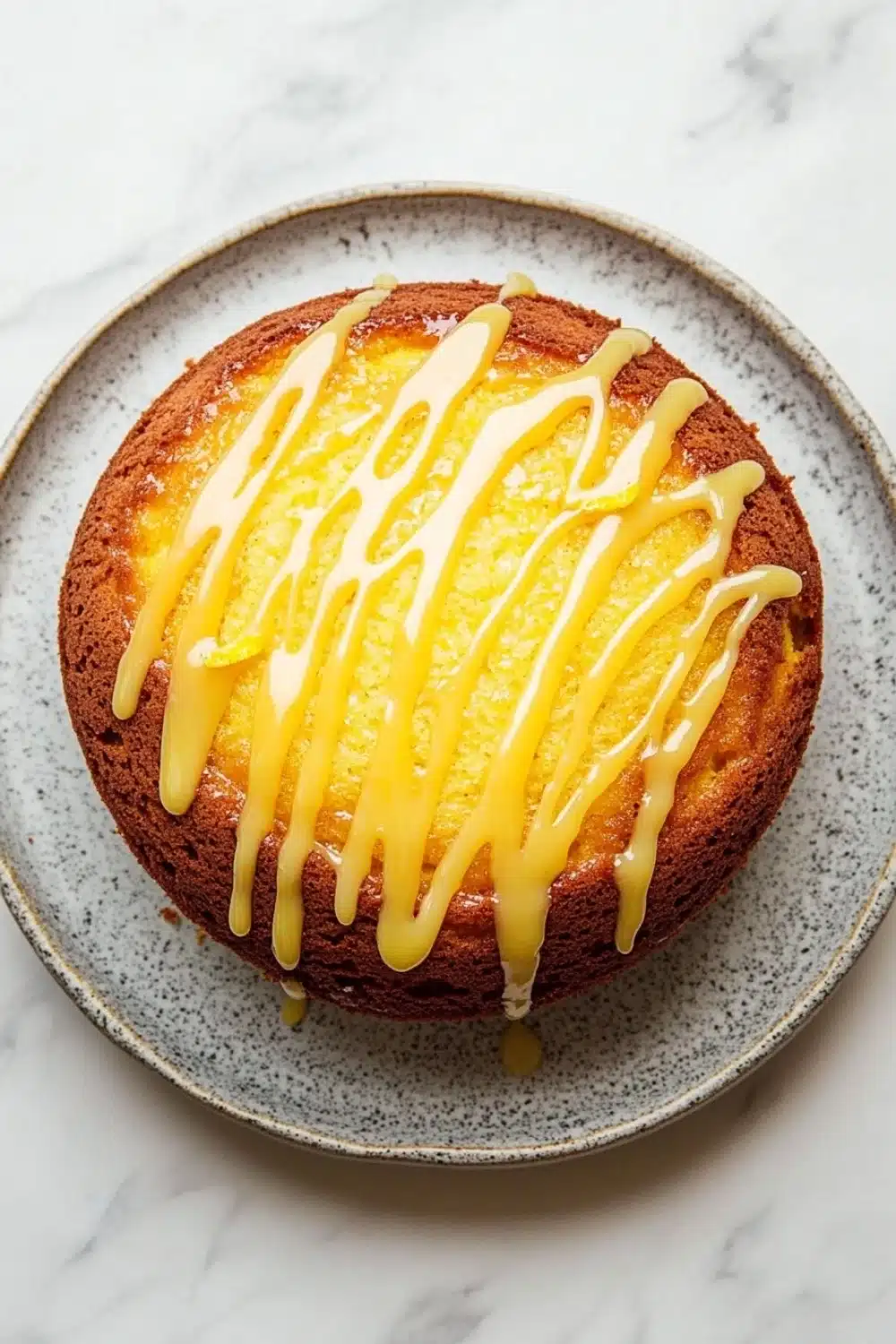
Sunshine in a slice.
There’s something about a lemon cake with lemon drizzle that pulls me right back to my grandmother’s kitchen—where the air was thick with citrus and a hint of sugar, promising something special. Baking this cake is like weaving magic into the mix: the tang of fresh lemon juice dancing with the sweetness that cuts through the winter blues or summer haze alike.
One time, I overdid the zest, thinking more was better—a rookie lemon lover’s mistake! The result? A punchy, almost cheek-puckering bite that jolted my taste buds awake. But you know what? That’s the beauty of this cake: it walks the tightrope between tart and sweet with an effortless grace, a true kitchen charmer.
When you drizzle that lemon glaze—slow and steady over the warm cake—it sinks in, soaking every nook and cranny with bright, tangy love. No fluff. Just pure, citrusy bliss.
If you’re looking to try something equally delightful, check out our Moist Banana Cake Without Buttermilk: Simple, Easy, Delicious recipe for a sweet treat that’s sure to please.
Real Life Benefits of Baking This Lemon Cake
- This cake is a breeze to whip up in about an hour—perfect for those last-minute get-togethers or unexpected guests.
- Its moist texture means leftovers stay fresh for days, so no rush to gobble it all down in one sitting.
- The tangy lemon drizzle packs a punch without being overpowering—no sugar shock here, just that right zing.
- Using basic pantry staples with a citrus twist makes it wallet-friendly yet impressive enough to steal the show.
- It stores like a champ: fridge, freezer, or countertop—flexible options for your sweet tooth cravings whenever they hit.

Lemon Cake with Lemon Drizzle
- Total Time: 1 hour 5 minutes
- Yield: 8 1x
Description
A moist and tangy lemon cake topped with a zesty lemon drizzle glaze, perfect for any occasion.
Ingredients
1 1/2 cups (190 grams) all-purpose flour, sifted
2 teaspoons baking powder
1/4 teaspoon salt
1/2 cup (115 grams) unsalted butter, softened
1 cup (200 grams) granulated sugar
2 large eggs, at room temperature
1/2 cup (120 ml) whole milk, at room temperature
2 tablespoons fresh lemon juice
1 tablespoon lemon zest, finely grated
1 teaspoon pure vanilla extract
1 cup (120 grams) powdered sugar, sifted
2 tablespoons fresh lemon juice (for drizzle)
1 teaspoon lemon zest (for drizzle)
Instructions
Preheat the oven to 350°F (175°C). Grease and flour an 8-inch (20 cm) round cake pan or line it with parchment paper.
In a medium bowl, whisk together the sifted all-purpose flour, baking powder, and salt. Set aside.
In a large mixing bowl, cream the softened unsalted butter and granulated sugar together using an electric mixer on medium speed until light and fluffy, about 3-4 minutes.
Add the eggs one at a time, beating well after each addition to fully incorporate.
Mix in the lemon zest and vanilla extract until evenly combined.
Reduce the mixer speed to low and alternately add the dry flour mixture and whole milk to the butter mixture, beginning and ending with the flour mixture. Mix until just combined; do not overmix.
Stir in the 2 tablespoons of fresh lemon juice gently with a spatula.
Pour the batter into the prepared cake pan and smooth the top with a spatula.
Bake in the preheated oven for 40-45 minutes, or until a toothpick inserted into the center comes out clean.
Remove the cake from the oven and allow it to cool in the pan for 10 minutes.
While the cake is still warm, prepare the lemon drizzle by mixing the powdered sugar, 2 tablespoons fresh lemon juice, and 1 teaspoon lemon zest in a small bowl until smooth.
Prick the top of the cake all over with a skewer or fork, then slowly pour the lemon drizzle evenly over the warm cake, allowing it to soak in.
Let the cake cool completely in the pan on a wire rack before removing and serving.
- Prep Time: 20 minutes
- Cook Time: 45 minutes
Explore more:
Breakfast Recipes
Mastering the Tangy Lemon Cake with Lemon Drizzle
The Lowdown on Ingredient Swaps — When Life Throws Lemons, Make Adjustments
Here’s the real talk—life isn’t always about sticking to the script. The recipe calls for unsalted butter and whole milk. But what if your fridge is playing hardball? Swap unsalted butter for salted butter, sure, but cut back on added salt by about half to keep the balance in check. No whole milk? Reach for 2% or even a splash of cream diluted with water—it’s all about keeping that moisture mojo intact. And sugar? Granulated is the OG, but if you want a tease of caramel notes, try light brown sugar. It’ll change the vibe slightly but still keep the cake from going flat. Fresh lemon juice is non-negotiable for that punch of citrus—bottled lemon juice? Meh, it’s a shortcut that usually fails the taste test, so resist the urge.
The Zen of Mixing: Why Overdoing It is a Cake Crime
Cake mixing is a dance, not a wrestling match. You start by creaming that butter and sugar until they’re as fluffy as a cloud after a spring rain—patience is key here. Then the eggs go in, one by one, fully committing each addition. Now, the critical juncture: combining the dry ingredients with the wet. You want to fold these together gently—think of it like whispering secrets, not shouting commands. Overmix and you’ll toughen the crumb, turning your tender lemon cake into a rubbery disappointment. I once had a batch where I got too zealous—lesson learned. Keep the mixer speed low, alternate flour and milk, and stop as soon as the batter looks homogenous. It’s a fine line but nails it every time.
Bounce-Back Tricks for When the Cake Goes Sideways
Ever poked a cake with a toothpick only to see gooey batter staring back like a bad omen? Don’t panic. That’s usually a sign you baked it too short or your oven’s temp is playing tricks. Next time—turn the cake pan, halfway through baking. Ovens are notorious for hot spots, and this move can save your bake. If the cake comes out dry? Your butter might have been too cold, or you overcooked it, causing that dreaded dustbowl crumb. Remedy: brush warm syrup (equal parts sugar and lemon juice) over the cake immediately after baking. It’s like a spa treatment for thirsty cakes. And the drizzle—don’t just slap it on. Prick the cake top to create tiny channels. This helps the zesty glaze sneak down and soak in, giving you that tender tang in every bite. Trust me; skipping that step is like leaving your best dance move off the floor.
Lemon Cake with Lemon Drizzle: FAQs
- Can I use lemon extract instead of fresh lemon juice?
- Absolutely. Lemon extract can substitute fresh juice, but use sparingly—it’s more concentrated. About 1 teaspoon should do the trick without overpowering the cake.
- What’s the best way to get a moist cake?
- Don’t overmix your batter—once you add the flour, mix just until combined. Overworking develops gluten, making your cake tough rather than tender. Also, baking just until a toothpick comes out clean keeps it juicy inside.
- Can I make this cake gluten-free?
- Yes, but swap the all-purpose flour for a 1:1 gluten-free baking blend that contains xanthan gum. It helps mimic the structure you’d get from gluten, ensuring your cake still has a good crumb.
- Do I have to prick the cake before pouring the drizzle?
- Yes. Those tiny holes are the secret. They let the lemon syrup seep deep into the cake rather than just sitting on top. This step cranks the zing factor way up.
- How long can I keep the cake refrigerated?
- Up to 5 days in an airtight container. Just bring it to room temp before serving so you don’t lose that soft, buttery mouthfeel.