
Fast dinner fix.
There’s something magic about tossing a handful of ingredients into a single pot and ending up with a satisfying meal that hits all the right notes. I remember those evenings when the clock’s racing against me, and the idea of a mountain of dishes is a nightmare lurking in the background. That’s exactly when this one pot tuna pasta shines—no fuss, no mess, just straight-up comfort food with a seafood twist.
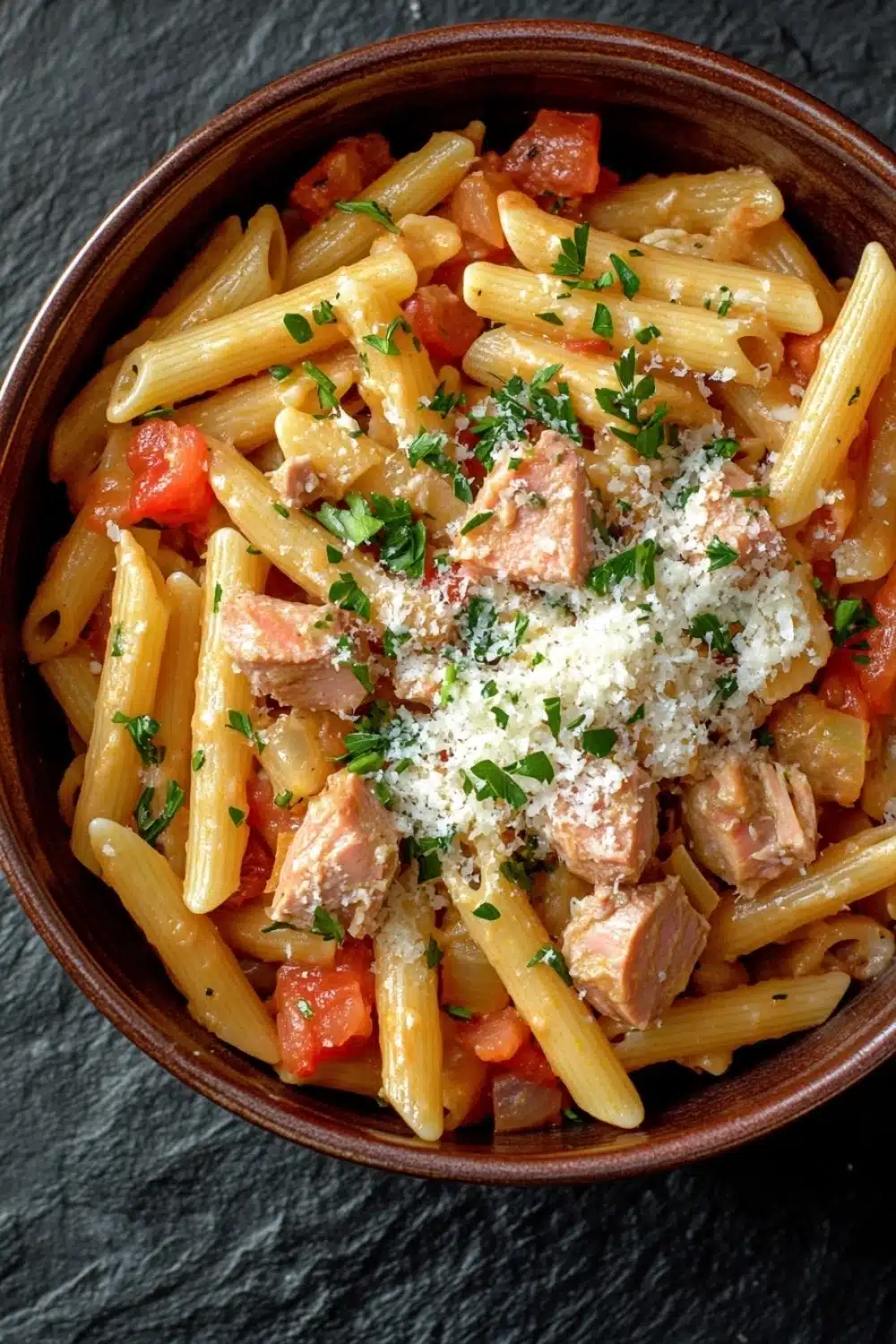
The beauty lies in its simplicity. Tender penne pasta cooks right alongside aromatic garlic and onions, bathed in a rich tomato broth infused with oregano, basil, and a cheeky kick of red pepper flakes. The tuna, delicate yet hearty, folds in at the last moment—like a secret weapon that turns humble pantry staples into a proper meal. It’s the kind of recipe that makes you wanna slap on your apron and say, “Let’s get this show on the road!”
This one pot wonder isn’t just about convenience; it’s about savoring every bite without the cleanup hangover. Trust me, once you go one pot, you’ll never look back.
If you’re looking to switch things up, try our Tuna Casserole with Potato Chips: Comfort Food with a Crispy Twist for a delicious one pot pasta thunfisch recipe.
Real Life Benefits of One Pot Tuna Pasta
- One pot wonder—minimal cleanup means more time binge-watching your favorite series or catching up with friends.
- Quick turnaround: from fridge to table in just 30 minutes, perfect for hectic weeknights when you’re running on empty.
- Budget-friendly protein punch with canned tuna, which stretches further than fresh fish without skimping on flavor.
- The subtle heat from red pepper flakes adds just the right amount of kick to keep your taste buds on their toes.
- Flexible meal prep hero—makes great leftovers that reheat well, saving you from the dreaded “what’s for lunch?” grind the next day.

One Pot Tuna Pasta
- Total Time: 30 minutes
- Yield: 4 1x
Description
A quick and easy one pot tuna pasta recipe that combines tender pasta, flavorful tuna, and a light tomato sauce all cooked together for minimal cleanup and maximum taste.
Ingredients
300 grams dried penne pasta
1 can (160 grams) tuna in olive oil, drained
1 can (400 grams) diced tomatoes
1 medium onion, finely chopped
3 cloves garlic, minced
4 cups vegetable broth
2 tablespoons olive oil
1 teaspoon dried oregano
1 teaspoon dried basil
1/2 teaspoon red pepper flakes
Salt, to taste
Black pepper, to taste
2 tablespoons grated Parmesan cheese
2 tablespoons chopped fresh parsley
Instructions
Heat olive oil in a large pot over medium heat.
Add the chopped onion and sauté for 3-4 minutes until translucent.
Add the minced garlic and cook for another 1 minute until fragrant.
Pour in the diced tomatoes with their juice, vegetable broth, dried oregano, dried basil, red pepper flakes, salt, and black pepper. Stir to combine.
Add the dried penne pasta to the pot and stir to submerge the pasta in the liquid.
Bring the mixture to a boil, then reduce heat to medium-low and simmer uncovered for 12-15 minutes, stirring occasionally, until the pasta is cooked and most of the liquid is absorbed.
Stir in the drained tuna gently until evenly distributed and heated through, about 2 minutes.
Remove the pot from heat and sprinkle grated Parmesan cheese and chopped fresh parsley on top.
Serve immediately, garnished with extra Parmesan and parsley if desired.
- Prep Time: 10 minutes
- Cook Time: 20 minutes
Explore more:
Dinner Recipes
Mastering One Pot Tuna Pasta: From Kitchen Hacks to Flavor Fixes
The Art of Ingredient Swaps: Keeping It Fresh and Fun
Sometimes, pantry roulette means you’re out of a key ingredient—happens to me all the time when juggling weeknight dinners. For this one pot tuna pasta, the basics are flexible. No penne? Rigatoni or even farfalle do the trick, as long as the pasta shape can soak up that tomato broth. Out of canned tuna in olive oil? Drain a regular tuna and toss in an extra splash of olive oil or a knob of butter for mouthfeel. Tomato-wise, diced canned tomatoes are a staple, but crushed tomatoes or even a quick blitz of fresh cherry tomatoes can add a zingy punch. Don’t have fresh parsley? Dried parsley or a sprinkle of oregano works—though never underestimate the lift that a fresh herb gives your final plate. Sometimes, a pinch of smoked paprika sneaks in, adding a cheeky warmth that makes the flavor pop.
Why Simmering Pasta in Sauce Changes the Game
Here’s the kicker—cooking pasta directly in the sauce and broth isn’t just a lazy cleanup hack: it’s the secret sauce itself. The starch released from the pasta helps thicken the sauce naturally, binding flavors into a cohesive, luscious coating that clings to every bite. No drowning in soupy sorrow here. Plus, as the pasta absorbs liquid, it sucks in the subtle flavors from the broth, tomatoes, and herbs, creating a dish that tastes like it simmered for hours, even if it was on the stove just 15 minutes. Stirring occasionally? Not optional; it’s the move that keeps pasta from sticking to the pot’s bottom and ensures even cooking. And when you fold in the tuna at the end, you maintain its delicate texture instead of turning it into a mushy tuna mash—trust me, overcooked tuna is the enemy.
Fixing Your One Pot Pasta When It Goes Sideways
Ever ended up with a gummy pasta swamp or a dry, clumpy mess? Been there, done that—no shame. Here’s how to read your pot and react fast. Too soupy? Remove the lid, crank the heat for a couple of minutes, and stir like a mad scientist to evaporate excess liquid. Got pasta sticking to the bottom? Lower the heat, add a splash of broth or water, and scrape gently with a wooden spoon—this rescue prevents scorched bits that ruin the whole pot. If the pasta turns out underdone but liquid is vanishing, add hot broth or water a little at a time, cover with a lid, and let it steam for a few minutes. And salt? It’s a finicky friend—if your dish tastes flat, a tiny pinch can brighten everything, but overdo it and you’ll be chasing bitterness.
One Pot Tuna Pasta FAQs
Absolutely! While penne works great here, feel free to swap in rigatoni, fusilli, or even spaghetti. Just keep an eye on the cooking time—different shapes soak up liquid differently.
Yes, draining is key. Leaving the oil or water can make the sauce oily or watery, messing with the texture. Trust me on this one—it keeps the sauce just right.
It has a mild kick thanks to the red pepper flakes, but it’s easily dialed up or down. Skip the flakes if you’re not into heat, or toss in a pinch more if you want to tango with some fire.
Nope, not without tweaking. Tuna and Parmesan are off the table for vegans, so swap tuna for chickpeas and Parmesan for nutritional yeast to keep it plant-friendly.
No. Freezing pasta with tuna and tomato sauce usually ruins the texture. Best to eat leftovers within three days and keep the fridge happy.